
This guide breaks down all of the commonly used crafting methods in Path of Exile 2 and how best to use them.
Path of Exile 2 has plenty of currency items that can be used for crafting. These range from simple crafting, which is closer to gambling than crafting, to more complex multi-step processes that can have very deterministic results, or save an otherwise mediocre item.
Table of contents
Beginner Tips
Before we jump straight into the items and how to use them for crafting, let’s cover a few basic things that are important throughout the process and some useful tips.
Items and Modifiers have important values that are hidden from view normally. These extra details can be revealed by holding Alt while hovering over an item. These are important to understand and will help identify both good and bad Modifier rolls.
Of these hidden details, Item Level is the most important line to pay attention to. This is because Item Level determines which Modifiers are available and what ranges they can roll in.
The Reforging Bench can take three items of the same item type, smash them together, and reroll their Modifiers. This is referred to as a 3-to-1, which works with most items in Path of Exile. This is primarily used to take multiple terrible rolls to get a chance at a better roll.
PoE2DB is your best friend when crafting. This helpful database site lists all of the available Modifiers, their Tiers, Item Level requirements, as well as any tags related to them. This can help determine the effects of different Essences, Omens, or other more advanced crafting.
Crafting is expensive; this goes doubly so for high-end crafts. This means we won’t use much beyond the basic processes while leveling or gearing up a character. The one exception to this is the Solo Self-Found (SSF) mode, which disables trading. In which case, we’re limited by what we can get personally.
If you’re looking to play around with Crafting and want to get a feel for how it works without spending currency to do so, Craft of Exile is another great community site for that.
Basic Crafting Currencies
Below is a table of the basic Currency items commonly used in crafting and their effects when used for crafting. The majority of these items do not work for Unique Items.
| Icon | Name | Effect |
|---|---|---|
 | Orb of Transmutation | Turn a Normal (white) item into a Magic (blue) item with 1 Modifier. |
 | Orb of Augmentation | Adds a Modifier to a Magic Item. 2 Modifier limit on Magic Items, one prefix and suffix. |
 | Regal Orb | Turns a Magic item into a Rare (yellow) item, adding a Modifier in the process. |
 | Exalted Orb | Adds a Modifier to a Rare item. 6 Modifier limit on Rare Items, three prefixes and suffixes. |
 | Chaos Orb | Removes a random Modifier on a Rare item and replaces it with a new Modifier. |
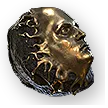 | Alchemy Orb | Upgrades a Normal item to a Rare item with 4 Modifiers. |
 | Divine Orb | Rerolls the Modifier Ranges of current Modifiers, within their respective range. Works on Unique Items. |
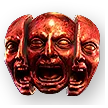 | Vaal Orb | Unpredictably alters an item, for better or worse |
 | Orb of Annulment | Randomly removes 1 Modifer from an item. |
Many of these currencies also come in Normal, Greater, and Perfect forms, altering the minimum level of Modifier applied by the item. This minimum level differs for lower-tier currencies, like Transmute or Augmentation, compared to Regals, Exalts, or Chaos.
| Tier | Low Tier | High Tier |
|---|---|---|
| Normal | 1 | 1 |
| Greater | 55 | 30 |
| Perfect | 70 | 50 |
Essence Crafting
Essence Crafting is largely similar to the basic method, except we have more control over what was previously a Regal Orb or Chaos Orb roll.
What is an Essence
Essences are useful crafting tools that we can get by defeating monsters imprisoned essences. These can be found at any point, but are far more common in Endgame Mapping.
Using an Lesser, Normal, or Greater Essence will turn a Magic Item Rare and add a predetermined Modifier. Perfect Essences however, will remove a currently existing modifier from a Rare item for another predetermined modifier.
| Name | Modifiers |
|---|---|
| Body | Lesser – Greater: Flat Maximum Life, based on Essence Tier and Item Type. Perfect: % Increased Maximum Life, Body Armour Only. |
| Mind | Lesser – Greater: Flat Maximum Mana, based on Essence Tier and Item Type. Perfect: % Increased Maximum Mana, Rings Only. |
| Enhancement | Lesser – Greater: Increased Armour, Evasion, or Energy Shield based on Essence Tier. Perfect: % Increased Global Defenses, Amulet Only. |
| Abrasion | Lesser – Greater: Flat Physical Damage for Martial Weapons, based on Essence Tier and Item Type. Perfect: % Damage Gained as Extra Physical Damage, based on Item Type. |
| Flames | Lesser – Greater: Flat Fire Damage for Martial Weapons, based on Essence Tier and Item Type. Perfect: % Damage Gained as Extra Fire Damage, based on Item Type. |
| Insulation | Lesser – Greater: Fire Resistance, based on Essence Tier Perfect: % Fire Damage Taken Recouped as Life, Belts Only. |
| Ice | Lesser – Greater: Flat Cold Damage for Martial Weapons, based on Essence Tier Perfect: % Damage Gained as Extra Cold Damage, based on Item Type |
| Thawing | Lesser – Greater: Cold Resistance, based on Essence Tier. Perfect: % Cold Damage Taken Recouped as Life, Helmet Only. |
| Electricity | Lesser – Greater: Flat Lightning Damage for Martial Weapons, based on Essence Tier and Item Type. Perfect: % Damage Gained as Extra Lightning Damage, based on Item Type |
| Grounding | Lesser – Greater: Lightning Resistance, based on Essence Tier. Perfect: % Lightning Damage Taken Recouped as Life, Gloves Only. |
| Ruin | Lesser – Greater: Chaos Resistance, based on Essence Tier. Perfect: % Physical Damage Taken as Chaos, Body Armour Only. |
| Battle | Lesser – Greater: Accuracy for Martial Weapons, based on Essence Tier. Perfect: Level of All Attack Skill for Martial Weapons, based on Item Type. |
| Sorcery | Lesser – Greater: Increased Spell Damage, based on Essence Tier and Item Type Perfect: Levels to All Spell Skills, based on Item Type; Foci, Staves, or Wands Only. |
| Seeking | Lesser – Greater: Increased Critical Hit Chance, based on Essence Tier and Item Type. Perfect: Hits Against you have % Reduced Critical Damage Bonus, Body Armour Only. |
| Command | Lesser – Greater: Allies in your Presence deal % Increased Damage, based on Essence Tier; Sceptres Only Perfect: % Aura Skill Magnitude, Sceptres Only. |
| Haste | Lesser – Greater: Attack Speed for Martial Weapons, based on Essence Tier and Item Type. Perfect: Chance to Gain Onslaught on Kill, Martial Weapons Only. |
| Infinite | Lesser – Greater: Flat Dexterity, Intelligence, or Strength, based on Essence Tier. Perfect: % Increased Dexterity, Intelligence, or Strength; Amulets Only. |
| Opulence | Lesser – Greater: % Increased Rarity of Items Found, Based on Essence Tier; Boots, Gloves, Helmet, and Jewellry Only. Perfect: % Increased Quantity of Gold Dropped by Slain Enemies, Gloves Only. |
| Delirium | Replaces Modifer with: Random Notable Passive, Body Armour Only. |
| Horror | Replaces Modifer with: Increased Effect of Socketed Items, Gloves and Boots Only. |
| Insanity | Replaces Modifer with: On Corruption, Item Gains two Enchantments; Belt Only. |
| Hysteria | Replaces Modifer with: Helmet: Level of all Minion Skills Body Armour: Flat Physical Thorns Damage Gloves: Increased Critical Damage Bonus Boots: Increased Movement Speed Ring: Increased Mana Regeneration Rate Amulet: % Damage Taken Recouped as Life Belt: Flat Stun Threshold Shield: % Increased Block Chance Quiver: Increased Damage with Bow Skills Focus: Increased Energy Shield Recharge Rate |
| Abyss | Replaces Modifer with: Mark of the Abyssal Lord. (applies a high-tier Modifier when Desecrating) |
Omen Crafting
Omen crafting is one of the only slightly deterministic ways to do any crafting in POE2. These Omens are only available through Ritual Altars, which makes many of them rare and prohibitively expensive.
There is just a total of 10 Omens that matter for crafting: The Omen of Homogenising Exlatation, two Omens of Crystallisation, two Omens of Annulment, two Omens of Erasure, the Omen of Whittling, the Omen of Corruption, and the Omen of Sanctification.
It’s important to remember that Omens need to be activated in our inventory to be used. If we do not activate them, they will just stay in our Inventory.
Omen of Crystallisation
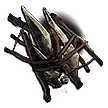
Omens of Crystallisation come in both Dextral and Sinistral versions, allowing them to target Suffixes or Prefixes respectively. This makes our next Perfect or Corrupted Essence target a Modifier of that type.
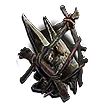
These are often used alongside a basic Exalted Orb, a Rare, to apply an undesirable Modifier to be replaced by the Essence Modifier. This use case is exceptionally powerful alongside the Corrupted Essences, particularly the Essence of Horror.
Omens of Annulment

Omens of Annulment comes in two varieties, Dextral and Sinistral. Each of these will limit the effects of Orbs of Annulment to hit either a Prefix or Suffix on an item. In this case, the Dextral variant will only hit Suffixes, while Sinistral will only hit Prefixes.

These are a safer way of attempting to remove an unwanted Modifier. It’s not perfect, as it can hit any Modifier of the respective type. However, this is still useful as it allows us to protect the good Modifiers on either side of the item and attempt to clean up the Modifiers on one side.
Omens of Erasure

Much like Omens of Annulment, Omens of Erasure come in Dextral and Sinistral varieties. Instead of modifying Orbs of Annulment, they instead affect Chaos Orbs. Dextral will still only hit Suffixes, while Sinistral only hits Prefixes.

Much like Omens of Annulments, these also work similarly to clean up unwanted Modifiers. However, unlike Orbs of Annulment, Orbs of Chaos will instantly replace the modifier. This means instead of leaving us with an open Modifier and having to spend an Exalted Orb to replace it’s done all in one motion.
Omen of Whittling

The Omen of Whittling is easily the most expensive Omen, being incredibly powerful and sought after for its effect. This powerful Omen also modifies Chaos Orbs, in this case however, it removes the Modifier with the lowest item level requirement.
While this Omen is active, hovering an item with a Chaos Orb will highlight the Modifier that will change. If you are unsure of which Modifier is being replaced, pin your item stats, then hover with a Chaos Orb to be certain you’re not losing a valuable stat.
This effect is incredibly powerful because of exactly what it does, which is to replace the “weakest” Modifier. The downside to this Omen is that many powerful Modifiers added through Essences or other means may be considered much lower-level requirement and be hit.
Omen of Corruption

The Omen will very often be the last step of any high-end crafting, if done at all, or commonly used on powerful Unique Items. This Omen modifies how Vaal orbs work, doing two notable things for them.
First, it removes the safe option of No Change. This guarantees that the item will experience some effect of corruption. This can be a change for the better, gaining a powerful Enchantment Modifier; or for the worse making its stats worse or occasionally, even changing the item entirely.
Second, it will apply two Corruptions instead of one. These two options chosen will never be the same, but there are multiple good and bad outcomes to be aware of. We can end up with powerful results like Modifier being strengthened in combination with a powerful Enchantment Modifier. However, the total opposite can happen as well where we get an entirely worthless Enchantement Modifier as well as have the Modifiers weakened.
Vaal Orbs are useful on their own, which often means that this is often only used on high-value Uniques as a result. Getting luck with rolls will result in incredibly powerful items, and depending on the results, can increase their value substantially.
This is a very high-risk, but high-reward way to push a build even further. Just remember the golden rule of Corruption: Don’t Corrupt something you cannot replace or have a replacement for.
Omen of Sanctification

The Omen of Sanctification unpredictably rolls the modifier ranges of Rare Items between 80% and 120% of their normal value with a Divine Orb and prevent further crafting. This can make an already powerful item even stronger.
Much like Corrupting with an Omen of Corruption, Don’t Sanctify an item you cannot replace or have a replacement for. Sanctification is a final step, and no further changes can be made after, making it a similar high-risk, high-reward way to make an item better.
Desecration Crafting
Added in the Rise of the Abyssals League, Desecration Crafting is one of the more powerful forms of crafting currently available. This often goes hand-in-hand with Omen Crafting to produce powerful items with a high degree of determinism not available in other ways.

The three tiers of Bones (Gnawed, Preserved, and Ancient) allow us to apply a variety of Modifiers to items that match their use. This results in a form of Veiled Modifier, which, when revealed, allows us to choose from three options. Some pieces of gear also get access to special Modifiers not obtainable any other way.
Desecration has its own set of Omens as well that allow us to influence the result. From predetermining the Lich Modifier, targeting specifically Prefixes or Suffixes like other omen types, or even getting to re-roll the Modifiers when revealing them. We detail all of these effects and how to use them in our Desecration Crafting Guide.
Crafting Process Breakdown
Below, we’ll cover the basic process of crafting an item from scratch. There are many ways to change our alter this process to further control the result, so learning the basics is a great place to start.
Step 1 – Find a Base
The first step is to find an item to work with. This can be any item you want, but the higher-level base items are better. Pay Attention to the level requirement, as this is a strong indicator of its tier compared to similar items, with Level 80 being the strongest. Each tier below requires 5 fewer levels for each tier lower it is.
For the best results, we’ll want items that are at least Item Level 75. Note that Item Level is not the same as the Level Requirement; Item Level is determined by the Area level in which the item is dropped. This opens up most tiers of many Modifiers, save for a few Modifiers that will ask for Item Level 80+. We can also pick up an item that already has a desirable Modifier for an easier start to the process and skip an early part of the process.
Optionally, once comfortable with the crafting process, we can use Exceptional Items, particularly those with extra sockets, to create incredibly powerful items. Be warned, these item bases are incredibly rare and by no means cheap.
Our item to craft can be any rarity, though the higher the rarity, the less control we have over it. However, we could also be lucky and be able to essentially skip the Basic crafting portion depending on what it rolls.
If an Item is Normal (White) or Magic (Blue) we’ll go to Step 2, if it’s Rare (Yellow), we’ll start at Step 3 instead.
Step 2 – Transmute, Aug, Regal
When starting with a Normal Item or Magic Item with just a single Modifier, we’ll start here. The goal of this step is to get 1-2 Modifiers we want, before moving on to further steps.
With a Normal Item, we’ll use an Orb of Transmutation first, preferably the highest tier we have for the best result. This will upgrade the Item to Magic Rarity and give it one Modifier. We may get something we want, we may not. At least with this Basic Method, there’s nothing to influence what we roll. However, we’ll cover a slightly different method later that helps with this.
After using an Orb of Transmutation, or if the item started as a single-Modifier Magic Item, our next step is to use an Orb of Augmentation, again highest tier available is preferred. This added a second Modifier and will fill the open Prefix or Suffix based on what its left open by the Transmutation. We can opt to skip this step as we have more control over the item while it is Rare.
At this point, if we hit two undesirable stats, we can set the item aside for a 3-to-1 to get a new Magic Item to start with. If we hit one decent Modifier, we can apply a Regal Orb to the item, upgrading it to Rare.

Alternatively, we can use an Essence to make the item Rare. This often means taking a slightly weaker but useful Modifier of our choosing, but removes the RNG of a Regal Orb.
At this point, if at least two of the three Modifiers on the item are good enough, we can move on to Step 3. If not, we can set it aside for a 3-to-1 for a new rare, or trash it if we’d rather start fresh.
Step 4 – Desecration and Exaltation
The final steps of the Basic Crafting is to fill the remaining Modifiers. We can do this in two meaningful ways: Desecration and Exaltation.
As detailed above, Desecration applies a Veiled Modifier, which we can reveal and choose from three different Modifiers to be applied. While this is by no means a guarantee, we can heavily influence this Modifier through Omens or simply our existing Modifiers.
Exaltation is simply using Exalted Orbs to apply additional Modifiers. While these are usually random, we can opt to use an Omen of Homogenising Exaltation to get more control over the roll.
If applying just Exalted Orbs, without any Omens or other influence, be sure to evaluate the item after each use. Determine whether or not it’s worth it to continue crafting on the or not based on the results.
At this stage, we can also utilize Perfect Essences in combination with Omens of Crystallisation to potentially make use of any bad Modifiers, assuming the item type has a desirable Modifier tied to a Perfect Essence. This is however, entirely optional if none are available.
Step 5 – Finishing Touches
Should we end up with something we want to use, it’s time for the finishing touches. This means applying Quality to Martial Weapons and Armour or using Catalysts on Jewelry, as well as adding sockets with Articifer’s Orbs. Below is a table of these currencies.
| Currency | Icon | Effect |
|---|---|---|
| Arcanist’s Etcher | 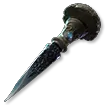 | Adds Quality to Wands, Staves, and Sceptres |
| Blacksmith’s Whetstone | 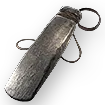 | Adds Quality to Martial Weapons |
| Armourer’s Scrap | 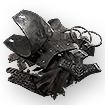 | Adds Quality to Armour |
| Artificer’s Orbs | 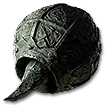 | Adds 1 Socket to Weapons or Armour |
| Catalysts |  | Improves the quality of Rings and Amulets, boosting specific Modifiers. |
We only want to do this to items we’re sure we’re keeping, using, or selling, as these items can be fairly limited early on. All of these can be gotten from salvage and will build up decently as long as we’re not spending them constantly.
For Armour, Quality will improve the item’s Defenses, such as Armour, Energy Shield, or Evasion. For Martial Weapon, this will increase the base damage of the Weapon. For Wands, Staves, and Sceptres, this will apply Quality to the skill attached to them item, which isn;t always helpful.
Sockets are also fairly flexible, allowing us to increase the damage of our weapons in various ways. They can further improve the defenses of Armour, or allow us to add resistance easily.
These Sockets can be filled with Runes or Soul Cores of our choice to add a wide variety of stats. The most common of these is to use Iron Runes in Armour for increased Defenses or Martial Weapon for Physical Damage, Soul Cores of Citaqualotl in Armour for All Elemental Resistance, or Soul Cores of Azcapa in Armour for Increased Rarity at the very late stage of a character.
Catalysts are something we’ll only use in the endgame, and very sparingly as it will require a lot of Breachs to get enough. Due to how these work, these can be exceptionally powerful as the select stat boosts allow us to improve many Modifiers that can be useful to a variety of builds. Such as using Reaver Catalyst for Rings that are stacked with Damage to Attack Rolls, or Sibilant Catalysts for items that have Cast Speed and Spell Damage on them.
Step 6 – Corruption or Sanctification
As an absolute last step, which as a reminder is entirely optional, we can choose to apply Corruption or Sanctification to an item. This will risk weakening the item for a chance at a more powerful outcome.
We only ever want to take this risk if we have a replacement item or the means to create a replacement. It’s never worth risking an item that is irreplaceable.
Of these two options, Corruption is generally safer. With an Omen of Corruption, we have a 1-in-3 chance to get the absolute worst result, which rerolls some of our item modifiers. The Best outcome will result in extra Sockets or a strong enchantment.
Sanctification is not only risky but incredibly expensive, requiring an Omen that is rare on top of a Divine Orb to be used in the process. It’s important to know that Sanctification rolls independently for each Modifier. This means the roughly 50/50 chance of a neutral or positive outcome versus a negative outcome rolling 6 times, not just once.
This results in a ~2.1% Chance of all of our modifiers having a result that is positive or neutral. Don’t expect perfection going into this either, as hitting the max (or min) roll on all 6 modifiers is a 1-in-4.75 Billion Chance.