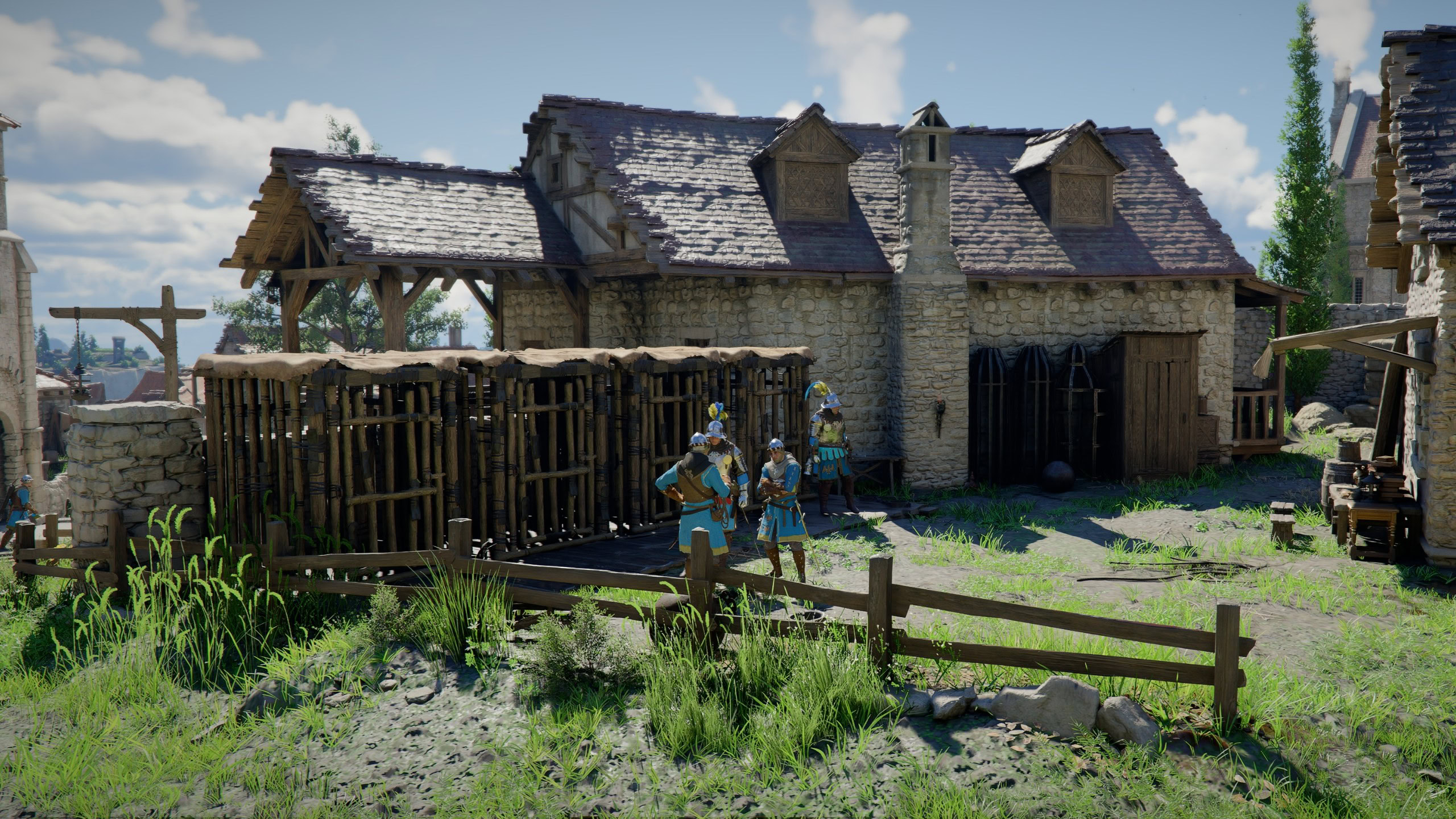

Everything you need to know about Crimson Desert’s crime system, including the advantages and disadvantages of stealing, and how to do it properly.
Consequences
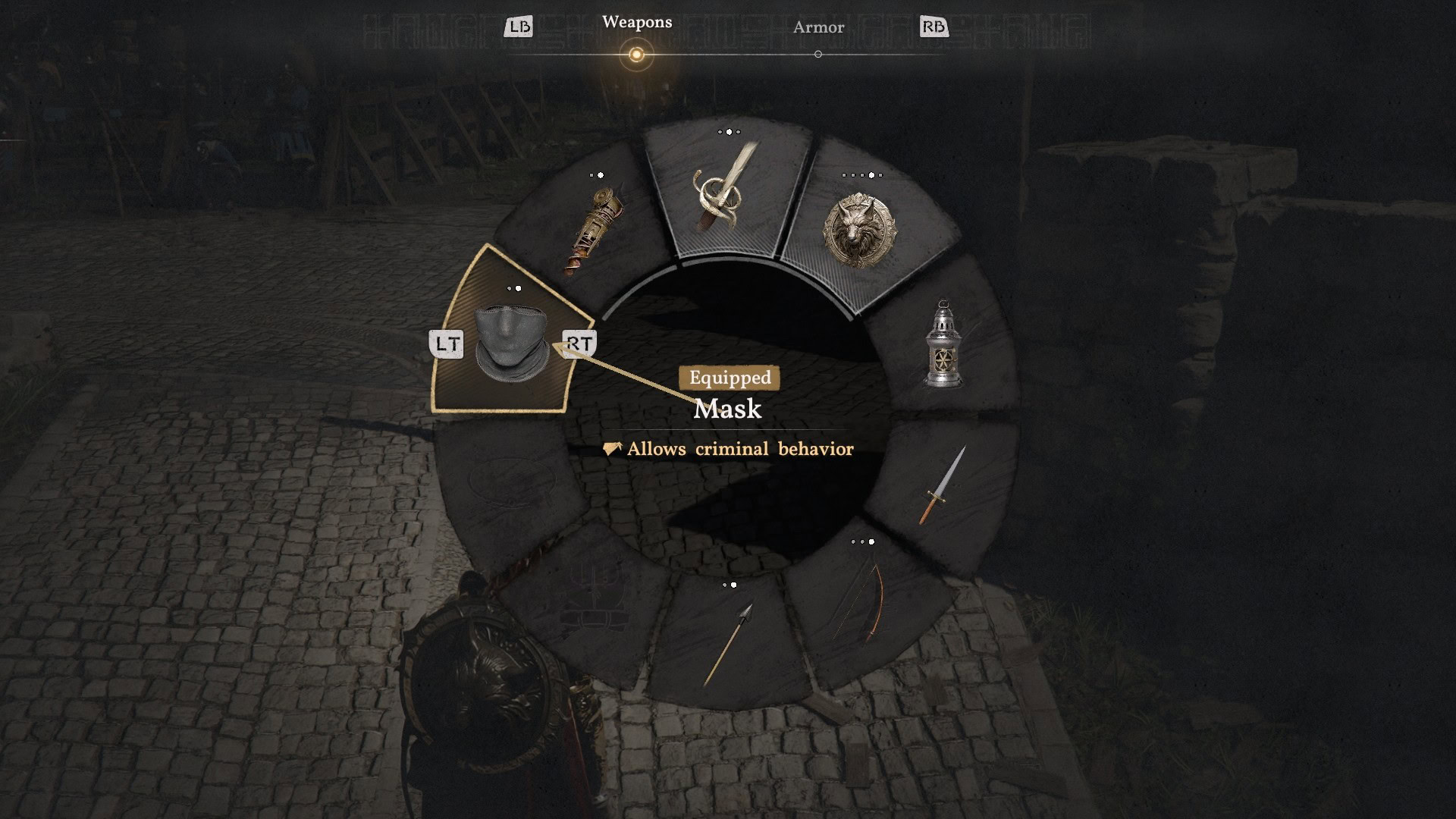
You can’t commit crimes unless you’re wearing a mask. If you get caught and sent to the constabulary, you’ll lose all your masks and have to pay a fine, but you do not have to give back anything you stole.
Your wallet can go negative if the fine is bigger than the amount you have on hand. It’s possible that banking is a protection against this, but it has not yet been economical for us to engage with that system. You need 100 silver + a gold bar (worth 500 silver) for it to be worthwhile.
Each time you commit a crime, a few things happen:
- A notification pops up with a timer attached to it that specifies the crime you committed, and further crimes of the same type partially refill it
- If you stole something, you get to keep it
- You lose points with the region’s Contribution
Crime Timer
As soon as you commit a crime, a timer pops up in the corner that specifies the crime you committed. If you get spotted by someone else while that timer is active, they will call the guards or try to fight you.
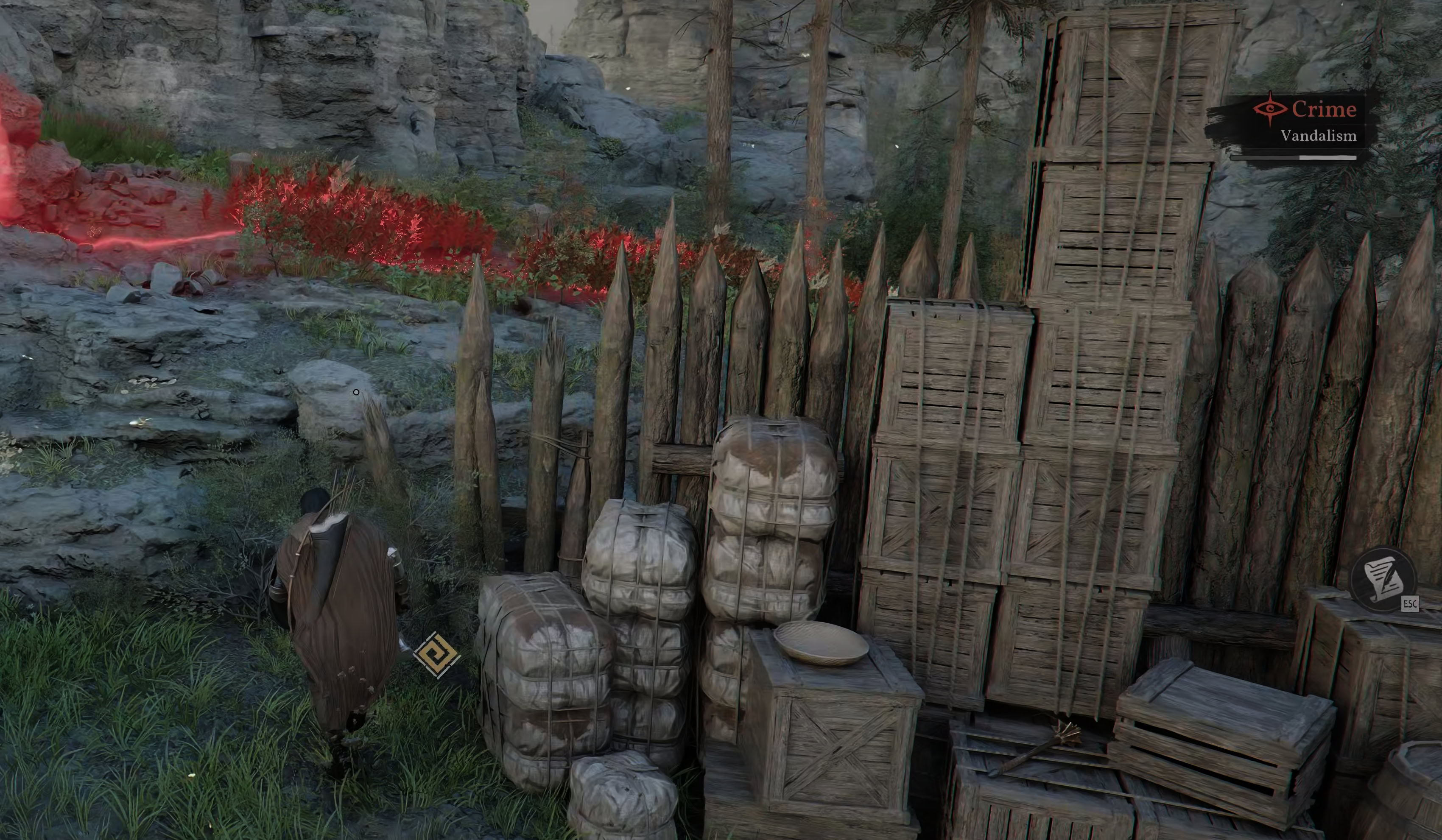
The first crime fills up the timer completely, and subsequent crimes just refill part of the bar, so you have an incentive to be quick about stealing stuff.
Loot
The main benefit of committing crimes is the loot you steal along the way. If you steal stuff, you get to keep it, even if you get caught and locked up. That loot can be worth quite a lot of money, or it could be something rare like a book with recipes or a fancy dye.
The best stuff is hardest to find, usually behind locked doors, in guarded secret rooms, or has a puzzle attached to it.
Contribution Penalty
Every time you commit a crime, you lose points with the region’s Contribution level. and happens regardless of whether or not you get caught. This is a flat cost that only depends on the type of crime you commit, not the severity of said crime.
For example, you will lose 5 points if you steal something, whereas you will lose 30 points if you assault someone, but it does not matter if you assault a noble or a commoner, you will lose 30 points either way.
It makes more sense to think of Contribution as something like karma, wellbeing, or affluence. Cities and neighborhoods with a lot of crime are worse off than those with less, and the Contribution level is meant to be a reflection of that, even if the culprit isn’t known.
To use an analogy, people in the Middle Ages didn’t know that the Black Plague was a bacterial infection carried by fleas on the backs of rodents. They didn’t even know what germs were, but the plague still ravaged cities across Europe and Asia all the same.
Types of Crimes
There are 4 main types of crimes you can commit, Vandalism, Theft, Assault, and Murder.
Vandalism
Vandalism is the name of the crime associated with “destruction of property”, so if you break someone’s bookshelf, that counts as Vandalism. Unlike other crimes, Vandalism does not carry a Contribution penalty.
You can still get a bounty placed on your head if you break enough stuff and others spot you.
Theft
Theft is the name of the crime associated with taking items that don’t belong to you. It can only occur while you have a mask on while looking at an item (LB/LT/CTRL) by pressing the steal button (A/✖/R). Theft is -5 Contribution per item stolen.
You can’t steal anything unless you’re wearing a mask. If you get caught and sent to the constabulary, you’ll lose all your masks. They drop from bandits, and you can buy them from illicit vendors.
There is no plausible deniability with Theft, so you get in trouble even if you steal something from bandits who stole it from someone else. Oftentimes, bandits are just squatting in someone else’s camp or settlement.
The game does not let you commit “armed robbery”, either. Once you engage in combat, you can’t steal anymore, and you get a bounty on your head.
For example, once you can tackle and tie up the shopkeeper, that puts you in combat, so you can’t rob his shop, even if no one else saw, and even though you were necessarily wearing a mask.
Assault
Assault is the name of the crime associated with attacking non-hostile NPCs, like civilians or guards. Don’t pull out your sword if you’re in a populated area. Assault is -30 Contribution per attack.
Murder
Murder happens when you defeat a non-hostile NPC, like a civilian or guard. Murder is -100 Contribution per life taken, which is a whole level!
You can’t murder individuals you can have meaningful interactions with, like vendors and questgivers, but you will effectively erase your regional contribution.
Getting Spotted, Pursuit, and Bounties
You get spotted if you commit a crime in the presence of a witness, as in Kliff has line of sight with another friendly NPC while the crime timer is ticking down.
As soon as you get spotted, you’ll either get fined immediately or have a bounty placed on your head, both are commensurate with the current crimes you have committed. The price on the bounty goes up in real time and matches the fine you’ll be assessed when you leave the constabulary.
Bounties in Crimson Desert work similar to how they do in Read Dead, both of which are analogous to the “stars” system found in other games like GTA and Cyberpunk 2077. In fact, you can see your current crime level when purchasing a Writ of Absolution.
The higher the bounty, the greater the pursuit, but bounties are regional, so you’ll have separate bounties for Hernand and Demeniss, for example.
You can’t teleport while you’re being actively pursued, and you’ll have a big red circle expressing the radius of other NPC’s awareness of you. Eventually, pursuers will give up.
When you get spotted by guards or bounty hunters, they will try to tackle you and take you in. A quick time event (QTE) will play and if you press the correct button while it’s in the specified zone, you will break free. You have 2 chances per tackle to escape.
Writ of Absolution
You can pay off your bounty without getting arrested by obtaining a Writ of Absolution from any church, even one in a region where you’re wanted.
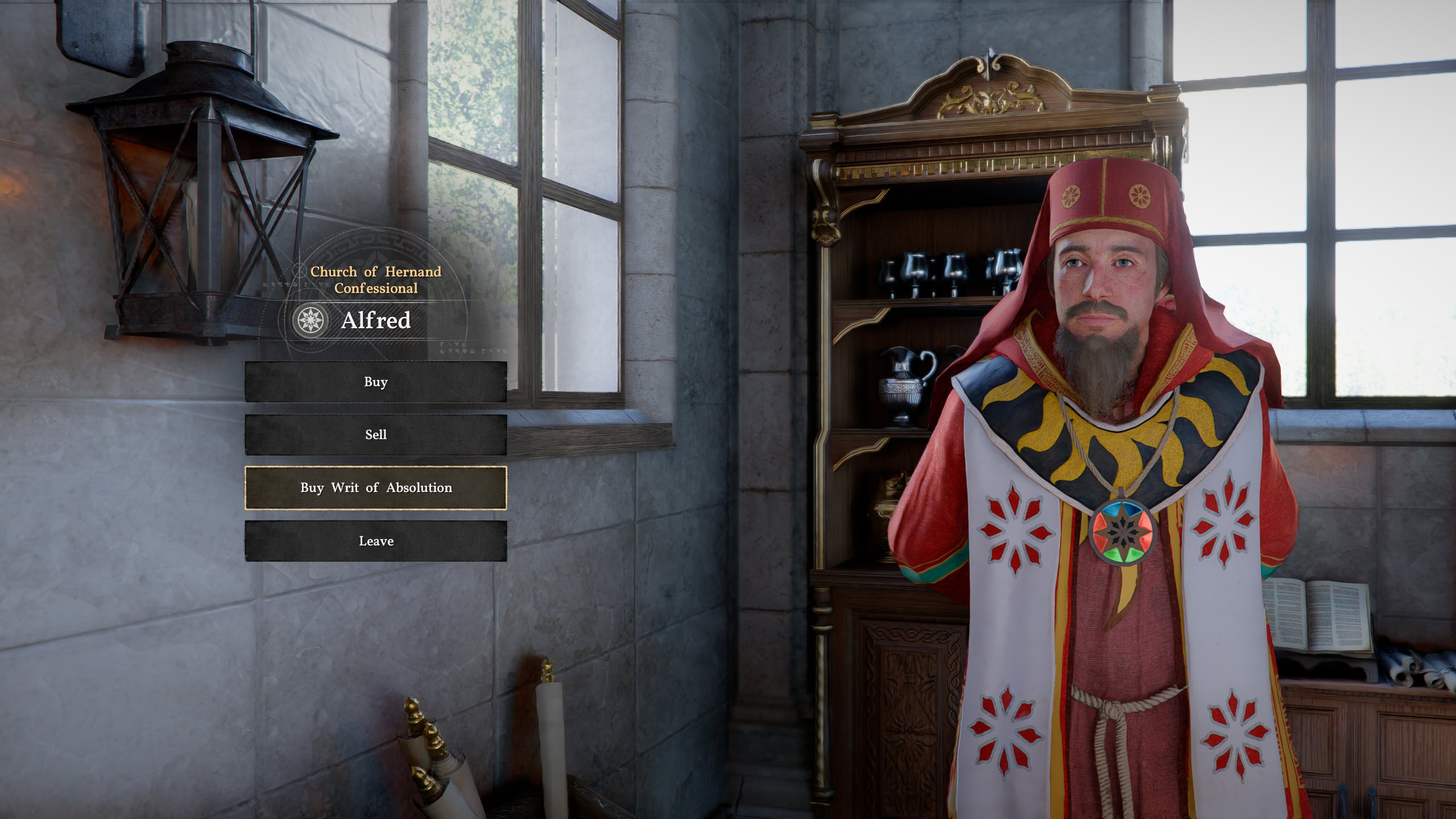
I’m not sure that you’ll be able to make it all the way to dear ol’ Alfred, here, if you have a huge bounty on your head…
Contribution
Contribution Shops sell very nice items in exchange for Contribution Medals you get from increasing your Contribution Level for the region. You increase your Contribution Level by doing things in the region that help it prosper,
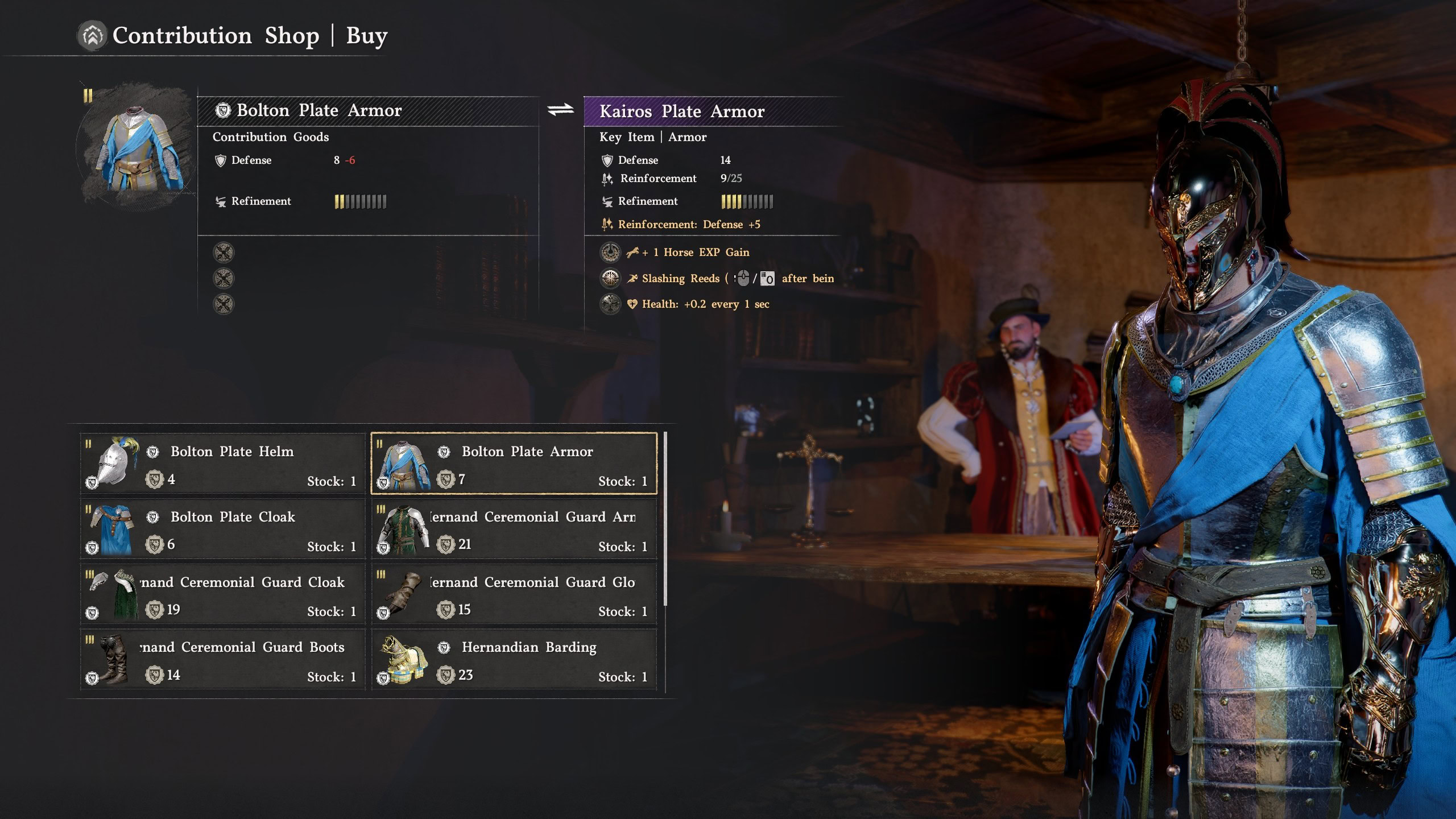
In essence, Contribution Shops are the prize box you get to pick from for being a good person. Items sold in the Contribution Shop are pretty valuable, so Contribution acts as the good karma foil to crime.
Is Stealing Worth It?
It can be, assuming you know what you’re doing. You can make quite a bit of money and find rare items from rummaging through peoples’ homes, but you do have to contend with criminality, Contribution penalties, and harder inventory management.
A lot of the stuff you can steal is not worth very much money and you don’t have the inventory space for all of it. Combined with the Contribution penalty and risk, it’s not worth it to completely clean out people’s houses.
Keep in mind that it only takes stealing 20 items to cost you a whole Contribution Level. Some experimentation is necessary, but you want to learn what the most valuable items are and only grab those. You get to see the prices only once something is in your inventory, or if it’s in a store, but that’s a lot riskier.
It’s not a good idea to become a thief if your plan is to scroll through some spreadsheet on your phone with the prices listed for every item in the game. That’s boring and tedious and you’re better than that.
Burglary isn’t that rewarding. You gotta use your brain and learn if you want to steal stuff. If you don’t want to learn to be a good thief, I think you’re better off focusing on being a good Greymane and buying everything from the Contribution Shop.
What to Steal
The “optimal” way to play involves only stealing the good stuff, so you won’t be able to get everything from the Contribution Shop, but you’ll be able to get most of it, and the stuff you steal will be worth more than the stuff you’re missing out on.
As a result, this section will focus on identifying high-value items and deciding what to steal.
Quick Thief Checklist
- Target the Rich: Prioritize noble estates, and especially puzzle-locked cabinets.
- Don’t steal visually worthless items: Check item names and judge their value based on that. The game does it too.
- Container hierarchy matters: Large, fancy, decorated and shining boxes and chests will contain more valuable items.
- Knowledge is important: Equipment, books and recipes are everywhere.
Detailed Looting Strategies
In general, items are named according to their value, so an “Acclaimed” painting is worth more than a “Study”, and gold finery is worth more than silver, though that doesn’t necessarily mean either is worth nabbing.
The source gives you a big clue as to the value of a given item. Something locked inside a fancy cabinet with a puzzle on it is going to be more valuable than anything else in the building. Larger estates often have secret passages or special locked doors, and you’ll often find the best goodies there, too.
Likewise, you’re probably going to find better goodies lying around on a table in a noble’s estate than you are digging through some random chest in a fisherman’s house.
Regardless, I don’t think either is guaranteed to be worthwhile, and I don’t recommend stealing anything that isn’t worth at least 1-2 silver. As you accrue more wealth throughout the game, raise your minimum standard in kind.
Nice jewelry boxes, strongboxes, and other such containers pretty consistently have something decent in them (you can open them in your Inventory like bags of coins), at least to where you’ll break even.
The type of box is indicative of what’s inside. No one is putting a priceless diamond necklace in a cardboard box, so make sure the boxes are at least somewhat elaborate.
Small Boxes aren’t worth it unless they come from a special place, and Chests are better than regular Cabinets or Wardrobes. Keep your eyes peeled for fancy glowing treasure chests as well.
There are also a few items that look really fancy but aren’t worthwhile, like most of the fancy vases and bottles. Make sure they say “Golden” and not just “Gilded”. Golden means it is made of gold, but you can bedazzle a red Solo cup and call that “Gilded”.
By the same token, there are also a few items that don’t seem like they’d be worth much but are, in fact, worth quite a bit of coin. The most notable example I’ve come across is the statuette, “Woman Holding a Water Bottle”.
Equipment and Knowledge are pretty consistently worth picking up, so long as you don’t recognize it as one of the cheapo generic types, like Bekker or Glenmore. By Knowledge, I mean things like recipes, books, and treasure maps.
Those little pieces of paper have consumable information on them and then you can sell them to a vendor, often for a nice chunk of change.
The game doesn’t care about who you sell your items to. All vendors are the same in that respect. There are no “fences”.