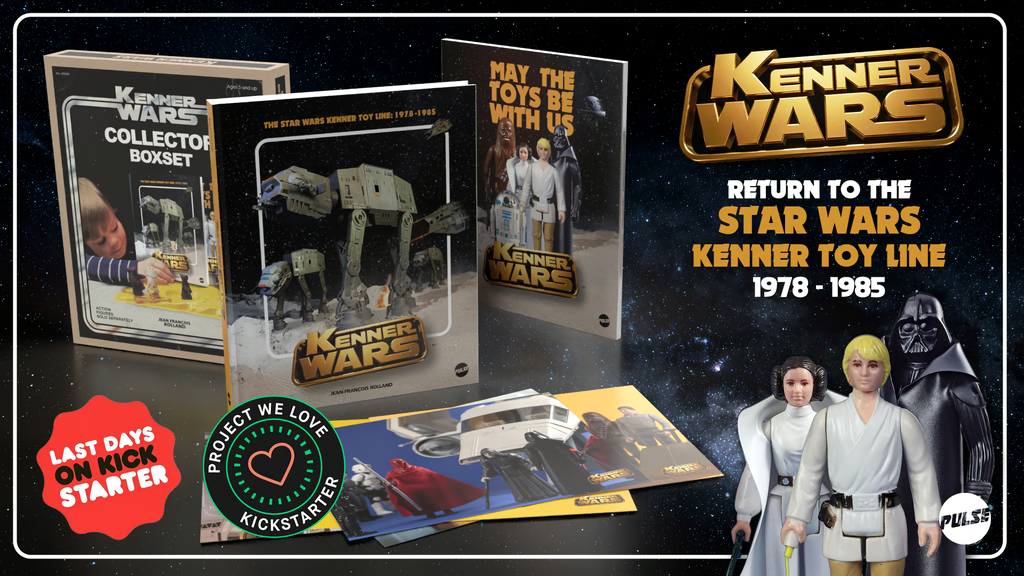
For a generation of Star Wars fans, the real saga played out on the bedroom floor, with a Kenner figure in each hand. The extensive guidebook Kenner Wars (published previously as Star Wars: The Kenner Toys 1978-1985) returns to that toy line in a brand-new expanded edition.
The Kickstarter from Paris-based publisher Pulse blew past its funding goal, and the book is now headed to print, with an exclusive slipcase and a companion book of vintage ads on offer.
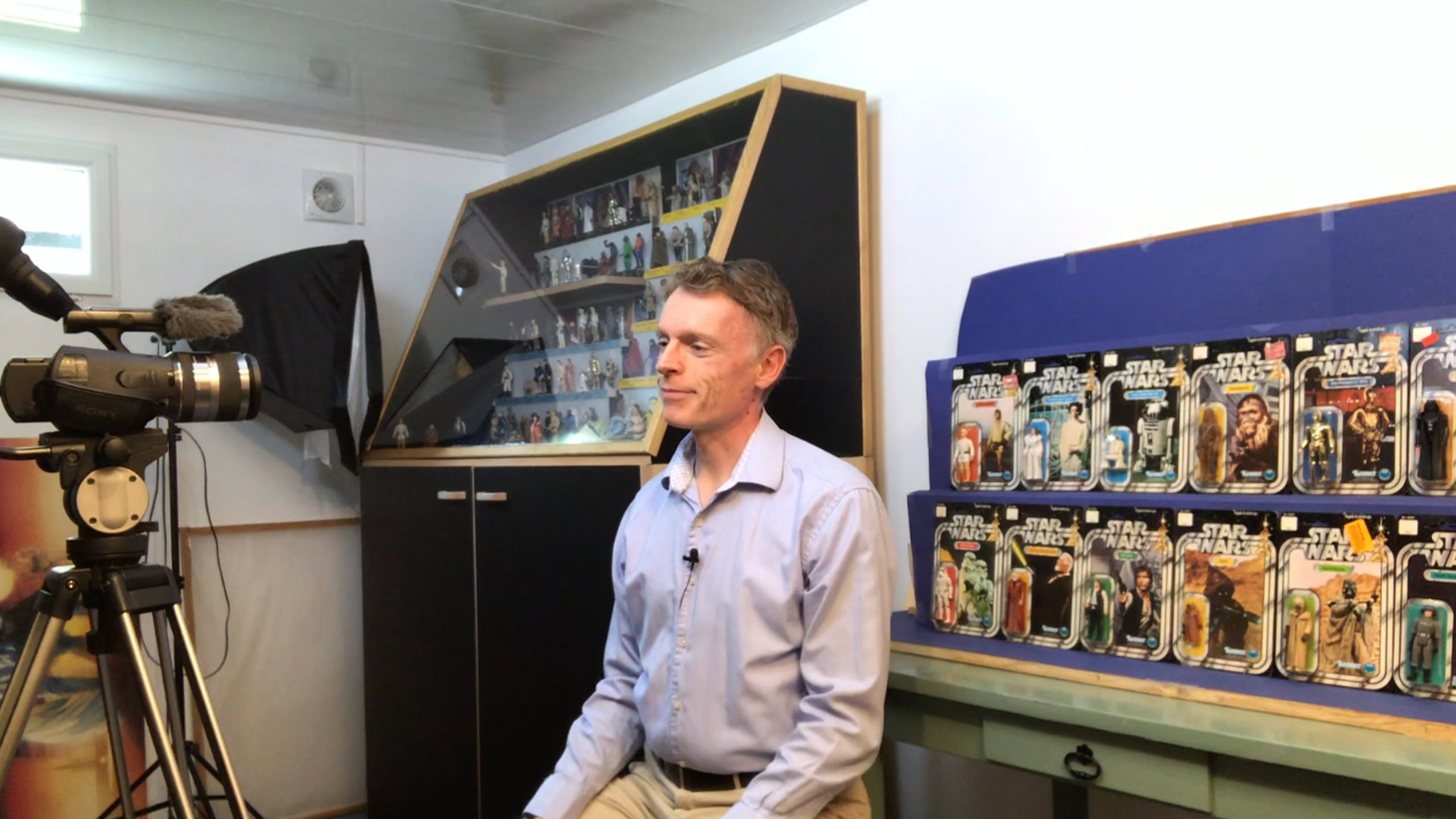
We are joined by Jean-François Rolland – the creator of the popular French pop culture and collecting channel Chronique Vintage, and author of the comprehensive guide Kenner Wars.
As an expert historian of vintage Star Wars merchandise, Jean-François offers an insider’s look into the line that revolutionized toy manufacturing forever.
Read on as we discuss the creation of his book, the enduring legacy of Kenner’s original trilogy toys, and his views on modern collectors’ culture.
What was your very first introduction to the Star Wars saga as a child, and do you remember the exact moment or toy that turned your initial awe into a lifelong collecting journey?
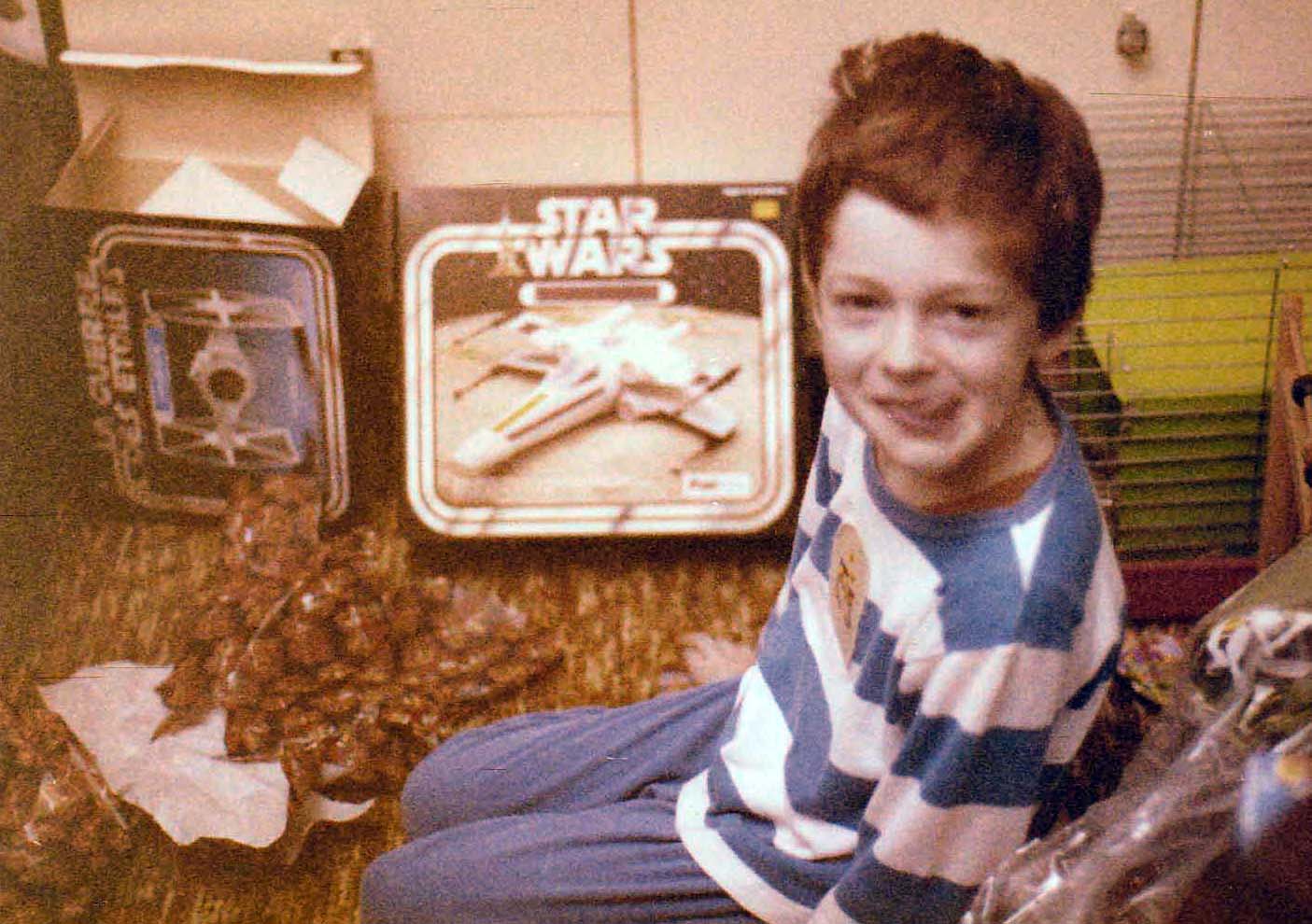
It was October 1977 when my parents took me to a movie theater in Paris, France. I was six years old, and because they had seen Star Wars a few days earlier, they thought it might be the kind of movie I would enjoy.
I vividly remember being fascinated by the lobby cards displayed at the theater entrance. They featured spaceships, tall yellow and small blue-white robots, and a giant gorilla holding a crossbow.
This was my first encounter with our beloved characters! Then, in the spring of 1979, I received my first two action figures. It was another major childhood revelation: discovering that toys based on my favorite movie actually existed.
The figures were a Stormtrooper and R2-D2. From that point on, there was no need to ask me what I wanted for Christmas or my birthday, the only question was which items from that year’s Kenner catalog I was still missing!
How did your personal history with the vintage fandom lead to creating Chronique Vintage, and at what point did you realize you needed to write a full-scale reference book?
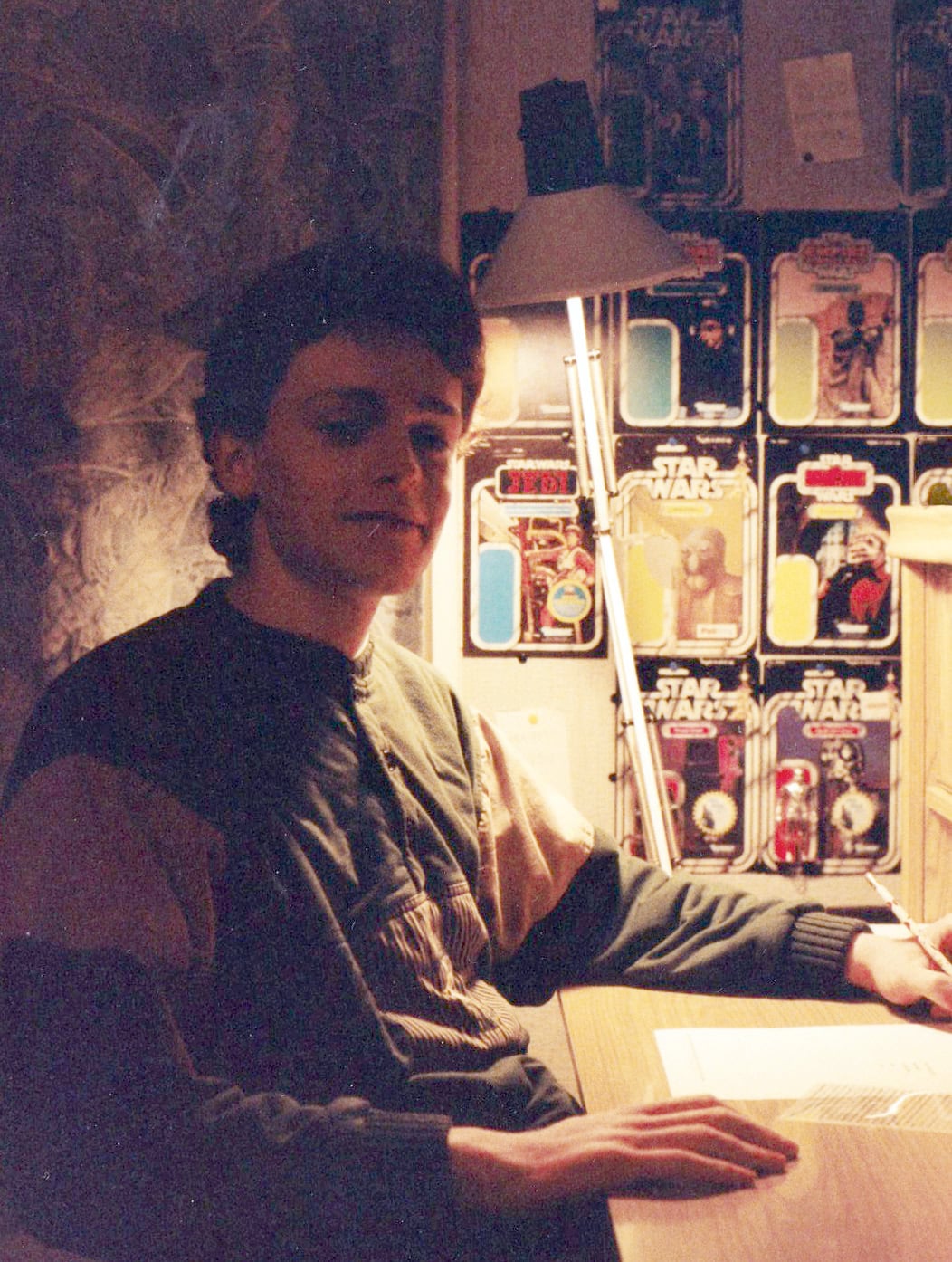
I had this project in mind ever since I resumed collecting toys as a young adult in the late 1980s. I remember using my dad’s typewriter to write a text and taking pictures of the French toy packaging I had from my childhood to illustrate it by sticking the photos on a homemade book where I explained how the French market was to fellow American collectors I was corresponding with or former Kenner employees.
“When Disney acquired Lucasfilm, it became the point of no return that pushed me to create my own book.”
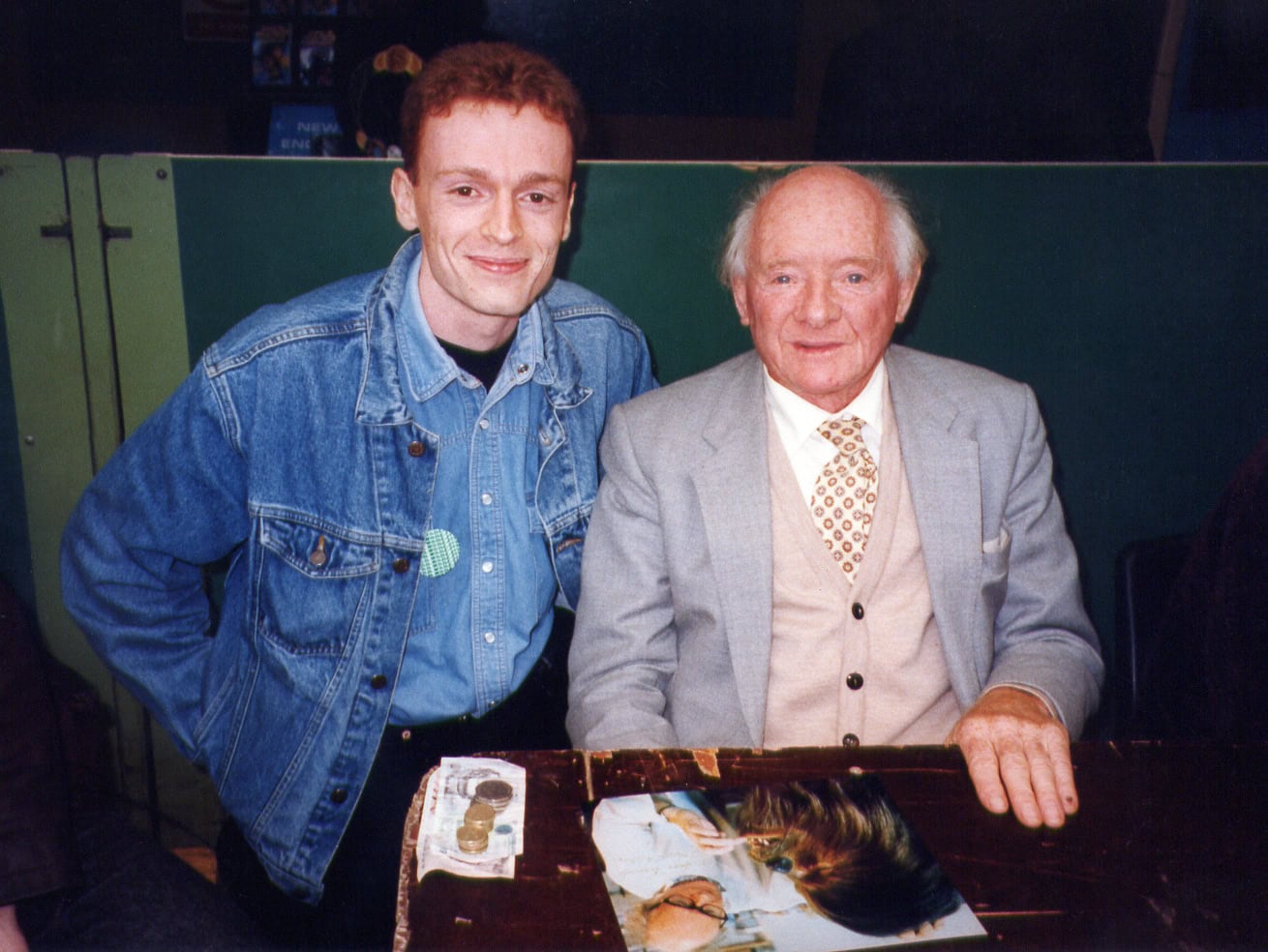
In the mid-1990s, I also wrote a small DIY fanzine/catalog and placed advertisements in monthly collectors’ newspapers in France to connect with fellow fans across the country. In a way, this was my very first experience with writing and publishing, albeit on a very modest scale.
I always enjoyed reading books such as Steve Sansweet’s 1992 From Concept to Screen to Collectible, Duncan Jenkins and Gus Lopez’s 2010 Prototype, and Sarah Monks’s 2011 Toy Town: How a Hong Kong Industry Played a Global Game.
So when Disney acquired Lucasfilm, it became the point of no return that pushed me to create my own book and eventually led to the creation of Chronique Vintage on YouTube and social media.
I posted my first video about the book project in 2017 on Facebook and the Rebel Scum forum, and the fan community responded very positively. Their reaction was a great encouragement to continue, especially since I had already been working on the book in my spare time, during evenings and weekends, since 2012.
Your original book debuted as Star Wars: 1978-1985 Kenner Toy Line, so what sparked the decision to rebrand, expand, and relaunch the project with Pulse Books as Kenner Wars?
As I was running out of English-language copies while demand remained strong, I began looking for a publishing partner for a third printing. Some mutual friends introduced me to the manager of Pulse Éditions, who immediately responded enthusiastically to the book.
I explained that I was also planning a second volume about advertising, and we reached an agreement very quickly. Publishers also tend to redesign the cover and change the title when they take over an existing project. After four years, I felt it was the right time to refresh the book’s identity and create a unified visual design for both books and the box set.
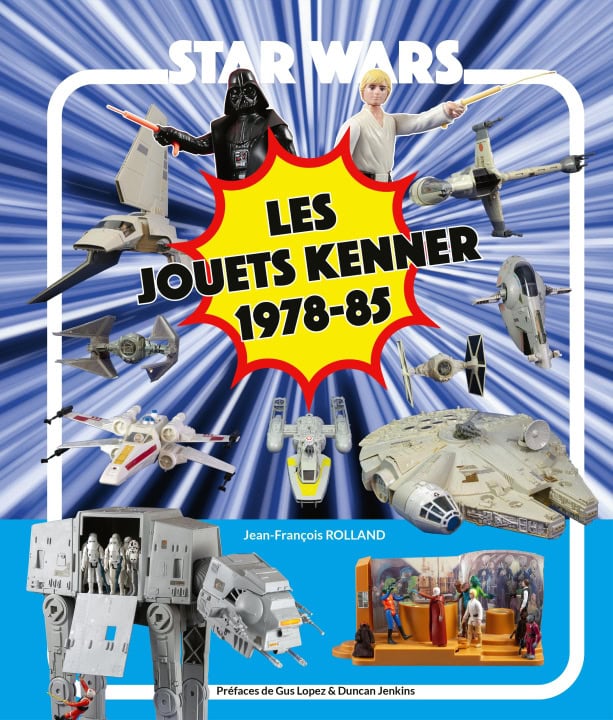
Vintage legends Gus Lopez and Duncan Jenkins contributed forewords to your workhow did it feel to collaborate with community archivists of their stature, and did it influence your research approach?
Finding the courage to contact them was the hardest part for me! They immediately agreed to be part of the project, and having them on board was both a genuine pleasure and a great honor. I never imagined that my book would begin with their forewords. I am deeply grateful and truly cannot thank them enough.
“What I did not realize when I made that decision was that creating a dedicated video for every toy would take three years.”
Many collecting guides focus almost strictly on cardback variations or price values, but Kenner Wars places heavy emphasis on contextual photography and childhood nostalgia—how did you approach curating that specific visual identity?
From the very beginning, I wanted the book to be accessible to everyone, not only collectors, but also to people who grew up with the toy line and anyone interested in learning more about this period and the development of the toy industry.
It tells the story of Kenner and the key people who negotiated the company’s deal with Lucasfilm and created this groundbreaking toy line. Organized year by year, the book documents the actual products available on the market, as seen in the Original Trilogy.
To make it easier to understand, I created a visual blueprint combining detailed information like the actual scale of the action figures, playsets, and vehicles, plus photographs. With more than 3,500 pictures, the book gives readers a clear understanding of the toys’ proportions and an in-depth look at the toy range.
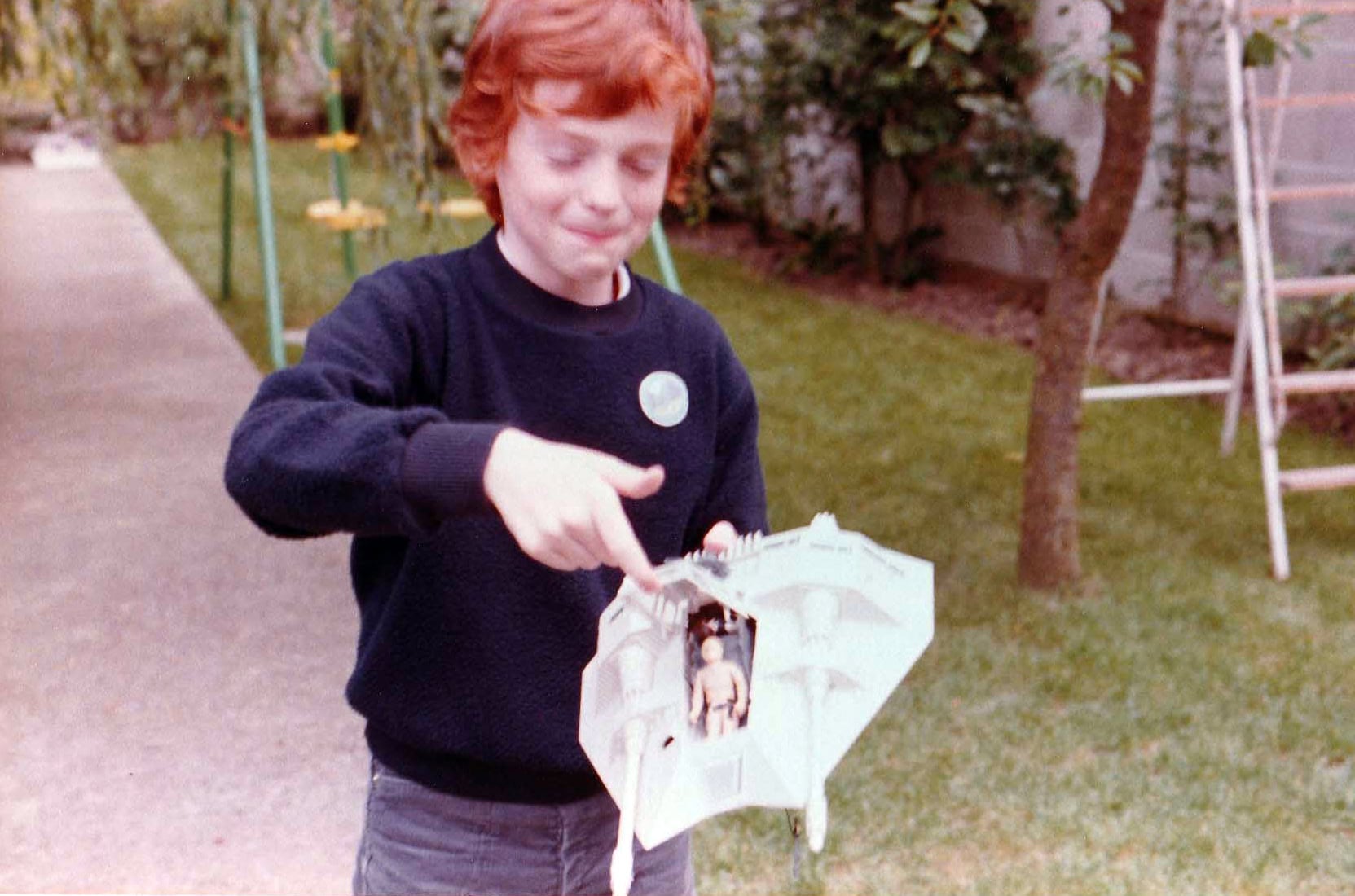
One of the standouts of the book is the use of QR codes linking directly to dedicated videos on the particular products. Tell us more about this aspect of Kenner Wars and what work went into it.
I came up with the idea of including QR codes linking to video descriptions in order to offer readers an additional experience: the opportunity to see the actual toys in motion.
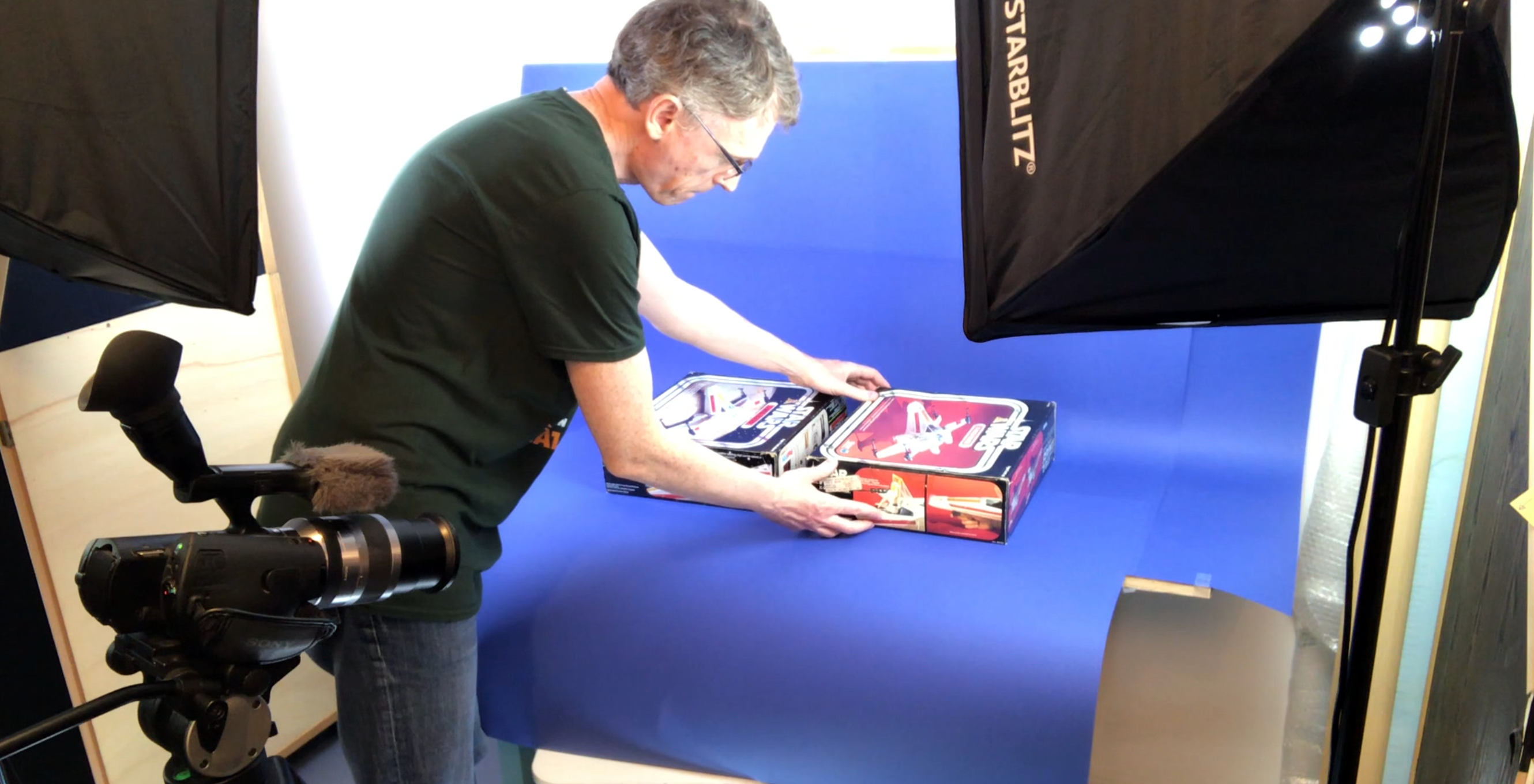
What I did not realize when I made that decision was that creating a dedicated video for every toy would take three years, from 2018 to 2021. During that period, I also went back to school to earn a degree in web design, learn how to build websites, and improve my skills in book layout. This enabled me to oversee every stage of the project, from editing the videos and designing the book to preparing the final print-ready files for the printer.
I filmed each toy together with all of its original packaging contents and details, including the box, instruction sheets, stickers, catalogs, and other inserts. This made it possible to understand exactly what was included with each spaceship or playset.
I also photographed packaging variations from different releases, such as the X-wing fighter and the Millennium Falcon, whose packaging was updated and reissued for The Empire Strikes Back and Return of the Jedi.
I remember having a particularly difficult time filming the scene between Han Solo and Greedo in the Creature Cantina playset. I had to shoot it more than 20 times before I managed to capture Greedo falling correctly onto the playset’s floor!
The Kickstarter release includes a companion volume focusing on period print advertising—what was the most unexpected or forgotten piece of promotional material you uncovered during that deep dive?
One of the things I found particularly interesting was the strong connection between the rise of department stores and the development of newspaper advertising. Toy advertisements were already appearing in newspapers as early as the mid-19th century, something I did not know before starting my research.
Clearance sales and home delivery also emerged during this period, and these shopping habits have remained surprisingly familiar ever since. I showcased a very nice Austrian toy advertisement from July 1985 featuring a Power of the Force logo with many toys.
“I have never had my collection graded because I enjoy it exactly as it is.”
It is a relatively uncommon piece, and I was pleased to add it to the European Return of the Jedi section. I am especially happy that readers will also discover a wide selection of advertisements from many countries around the world.
Beyond obvious fan favorites like the Millennium Falcon and the original figures, which lesser-known playset, vehicle, or figure do you feel deserves way more credit for its play value or engineering?
The AT-AT may not be the most obscure vehicle in the toy line, but it is an incredible piece of engineering, and I always like to highlight it for that reason. It was undoubtedly one of the most complex and impressive toys of its time.
A child in 1981 was simply stunned by its size when he saw it on the toy-store shelf. With most of its parts assembled at the factory and the “toyetic” capabilities of this massive vehicle, it is definitely one of the best ever produced during the 1980s.
The 1985 Power of the Force line marked the end of the original Kenner era—how did you tackle documenting that bittersweet transitional period as Star Wars mania was winding down?
I did collect information from former Kenner employees. The short-lived Power of the Force line contains more action figures than vehicles, partly because Kenner abandoned several products showcased at the New York Toy Fair in February 1985.
Because my book focuses on the toys associated with the Original Trilogy, I include the A-wing fighter, even though it was released in the cartoon Droids’ packaging.
I also focus on the information related to the Planetary Maps included with the vehicles. To complete the 1985 figure series, I presented Yak Face in its Canadian bilingual packaging. It was, indeed, a time of great disturbance in the Force.
I know that throughout the years I have developed a certain aversion to today’s extreme consumerism, the never-ending licensing of exclusive merchandise, the monetization of childhood nostalgia… What are your views on the matter? Is the modern collectors’ market getting too crazy and over-commercialized? It feels like toys and collectibles are increasingly tailored for adult buyers and financial speculation rather than actual play and joy for kids—what’s your perspective on this shift?
I believe collecting toys should be fun above all else. Today, prices are often driven by speculation, particularly when it comes to professional grading. I understand why some collectors put their action figures in archival acrylic cases: they protect the figures, and they can look great when displayed together. Personally, though, I have never had my collection graded because I enjoy it exactly as it is.
I started collecting at a time when action figures cost around €3.50 in 1986 and had risen to €35 by 1990, a tenfold increase in just a few years. That was already a huge jump back then. So as long as your collection brings you joy, I believe you should collect in whatever way works for you. Enjoyment should always be the main goal.
Running a Kickstarter campaign can be an intense ride—how was the community response, and what did reaching your funding goals tell you about the current appetite for vintage Kenner history?
I believe the appetite is still very strong. The publisher set a fundraising goal of €30,000, and as I write this, we have already raised €186,000! It is an extraordinary result, but it also gives us a responsibility to do everything we can to deliver a high-quality box set to our backers and future readers.
I am amazed and incredibly happy to see that interest remains so strong, and I’m so thankful to everyone who backed this project on Kickstarter. Perhaps it is partly because next year marks the 50th anniversary of Star Wars. But who could have imagined that we would still be talking about it and celebrating it, half a century later?
When tracking down pristine samples for a massive photographic reference, was there a specific rare piece or packaging variant that proved extraordinarily difficult to document?
I was fortunate to build my collection of packaged toys during the 1990s, but the most challenging item to find in good enough condition to photograph was the Dagobah playset. The small piece of foam representing the swamp where R2-D2 disappears deteriorates over time and crumbles as soon as you touch it. Most examples are missing the foam, so it took me a long time to find one in perfect condition.
Beyond ’80s kids who remember buying these figures off store pegs, what do you hope younger generations of Star Wars fans take away when they flip through Kenner Wars for the first time?
Kenner’s Gooney Bird used to say, “It’s Kenner, it’s fun!” So I hope younger readers will enjoy discovering this toy line and gain a better understanding of what brought so much joy to their parents.
Now that Kenner Wars has successfully funded and is heading to readers, are there other vintage toy lines or international variations you would love to explore in a future book?
I have another Star Wars book project in mind that I hope to publish one day. It has been sitting on my desk for quite some time, but because it is covered by a confidentiality agreement, I am not yet able to discuss it. To be continued!