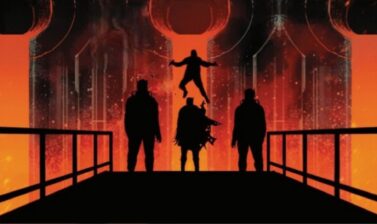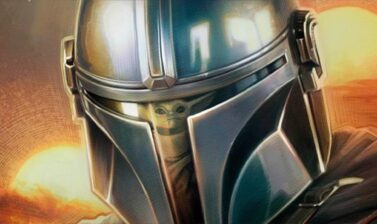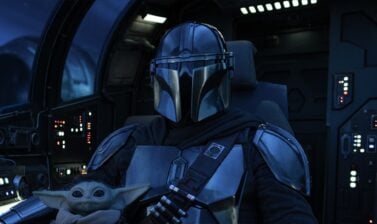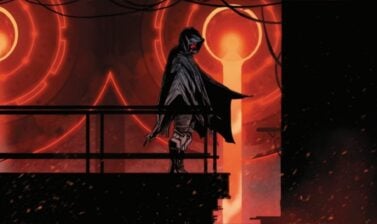
If I can get a game with art by Doug Chiang, Christian Alzmann, Ryan Church, and Brian Matyas, I’d take it any day of the week! This is the Way!
Board games have always been part of Star Wars fandom. With the original movie’s almost overnight success, audiences were more than eager to bring the characters home and assume ownership of the stories in some way or another.
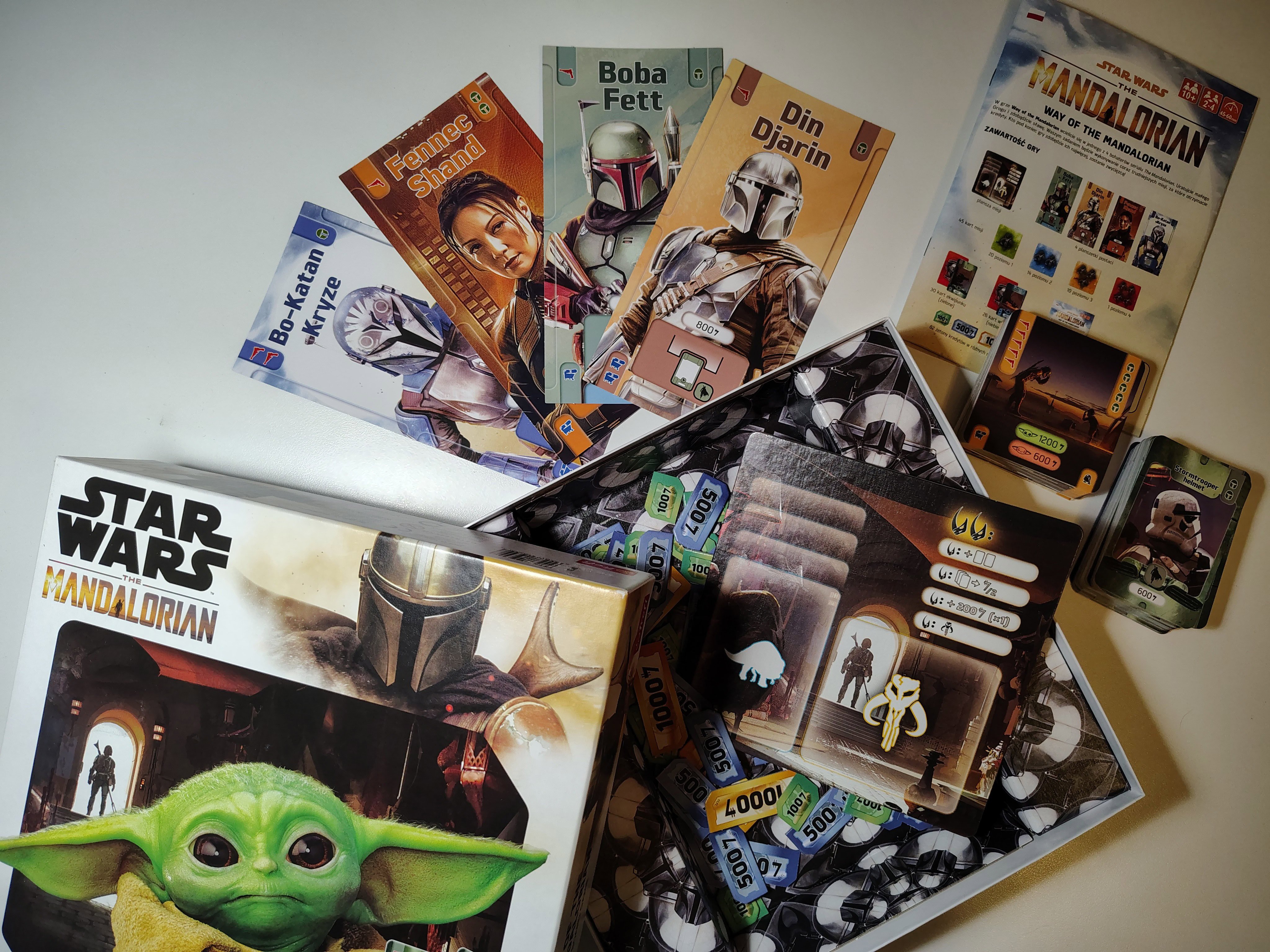
Board games proved to be a perfect way to do that as they were quick and cheap to produce. 1977 saw the release of Kenner’s Star Wars: Escape from the Death Star and The Adventures of R2-D2 and since then the list has come to include literally hundreds of titles, anywhere from cheap mass produced games to ellaborate collectors’ sets. Well, Trefl’s 2022 board game Star Wars: Way of the Mandalorian comes somewhere in the middle.
Product of Poland
Found in Sopot, Poland, in the mid-80s, family-owned Trefl has become one of Europe’s leading jigsaw puzzle producers and has quickly expanded into board games and even toys and cartoon shows.
The company has released thousands of good quality budget-friendly licensed products throughout the years, including a number of Star Wars puzzles and games.
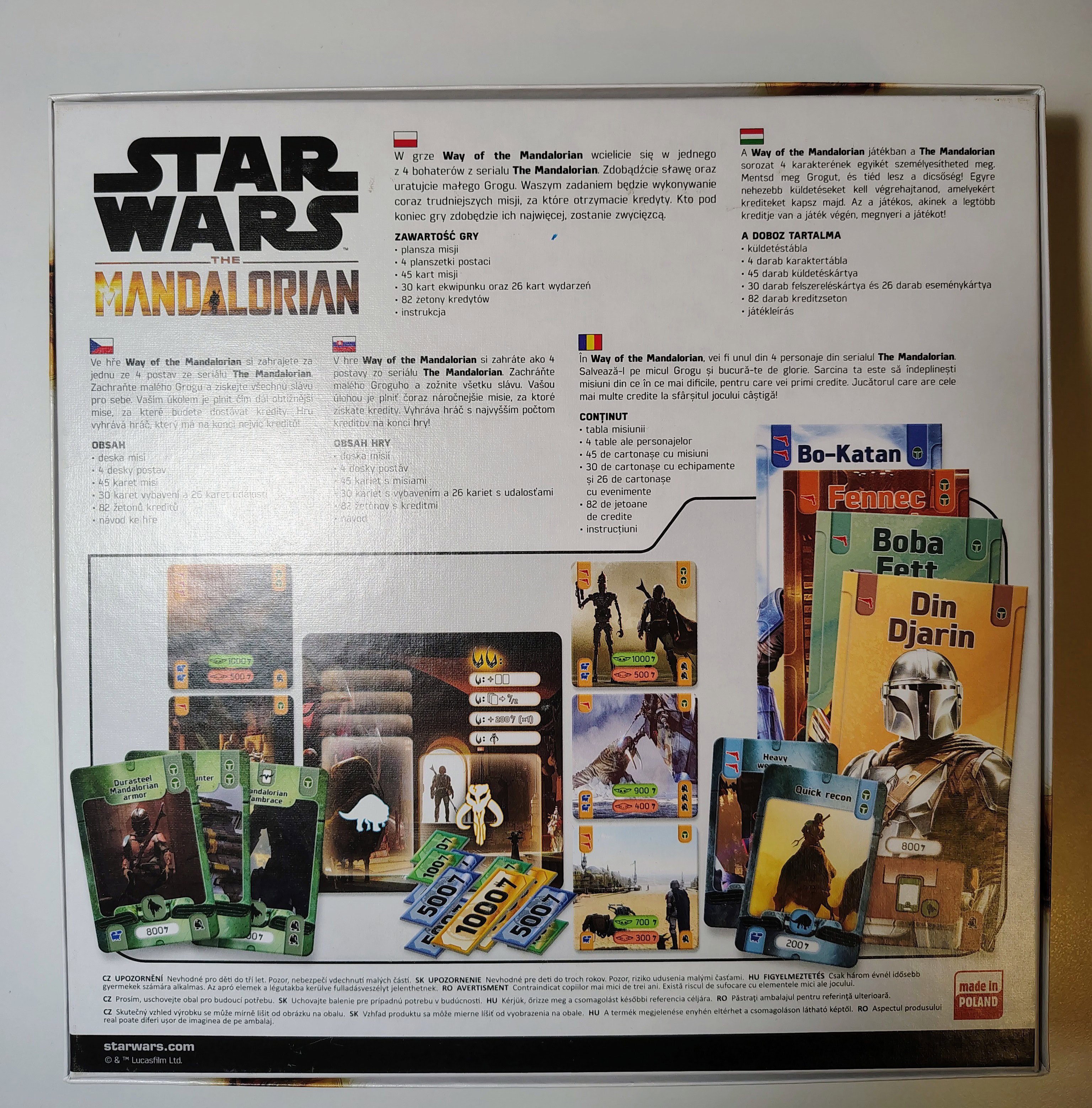
Star Wars: Way of the Mandalorian is one of them and since it has been released mainly in Central Europe it has remained somehow obscure and unknown for foreign fans, which is a shame since it is a quite decent piece of Star Wars themed casual family fun and can serve as a pleasant warm-up or filler game for more demanding and advanced gamers.
Moreover, the game is not language dependant and the rules are simple and easy to grasp, so even if you are not familiar with any of the European languages included in the instructions booklet or you do not find an English translation online, with the help of Google Lense you will have no trouble at all learning how to play in a matter of minutes.
The Aim of the Game
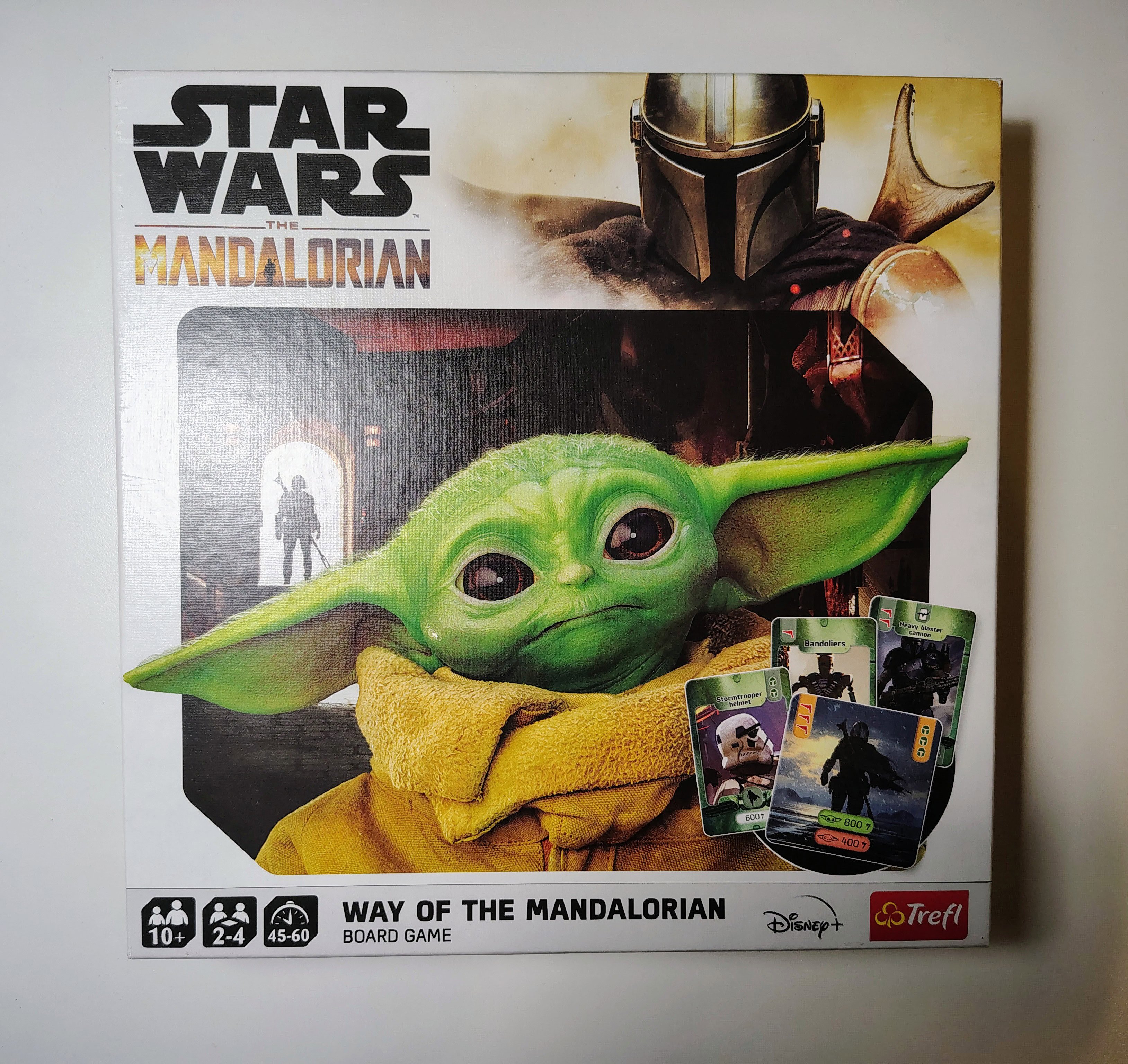
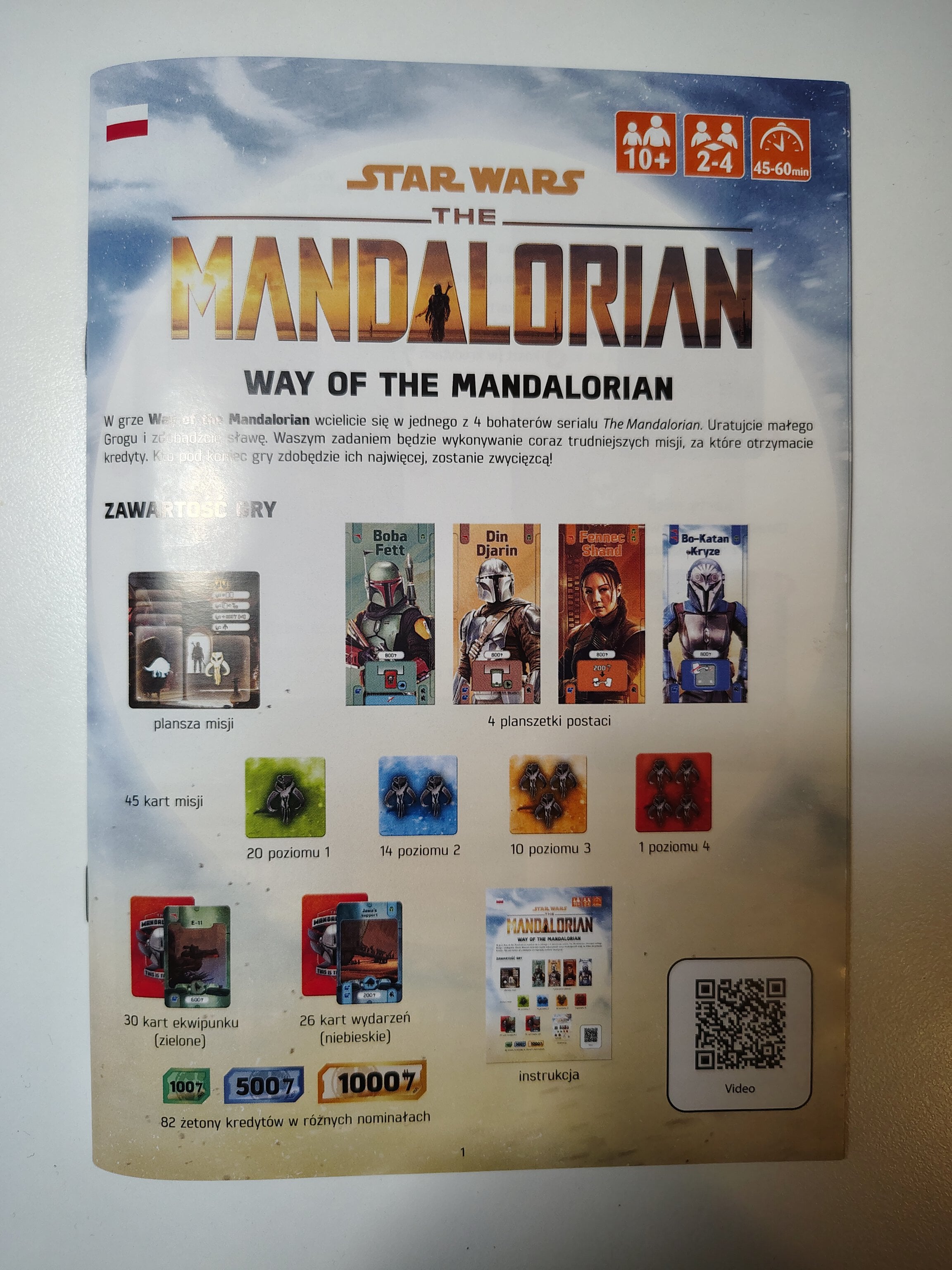
“In the board game Way of the Mandalorian you will take on the role of one of the four characters from The Mandalorian series. Rescue little Grog and make a name for yourself! Your goal will be to complete increasingly difficult missions, for which you will receive credits. The player who obtains the most credits at the end of the game will be the winner.”
Designed by Mariusz Majchrowski of Spy Guy fame, Star Wars: Way of the Mandalorian is a 2 to 4 player strategy game, rated ages 10 and up.
It is supposed to run anywhere between 45 and 60 minutes, but if played by two experienced players who don’t need to think too much before taking their turns, it can get considerably shorter.
Players choose between four famous galactic mercenaries – Din Djarin, Boba Fett, Bo-Katan Kryze and Fennec Shand. The aim is to be the first to rescue (or capture?!) poor little Grogu… and get rich in the process.
Theme and Tactics
Way of the Mandalorian has no actual plot or campaign, the players simply race to complete missions. It is loosely based on The Mandalorian season 1 and 2, but it takes some imagination (and possibly the Mando soundtrack playing in the background) in order to feel the Star Wars atmosphere the game aims to deliver.
What Majchrowski has done here is relatively simple – he has taken the basic idea of earn and upgrade mechanics and applied it to bounty hunting.
Completing a mission earns you coredits, while failing to deliver the bounty results in financial penalty. The idea is that if you didn’t complete your contract, you have to compensate the client.
After a certain ammount of completed missions, the most difficult one will pop up – finding Grogu.
If you’ve stacked enough resources (in the form of cards and credits) you can go after The Child and get a hefty bounty. Once the Grogu mission is complete, the game ends.
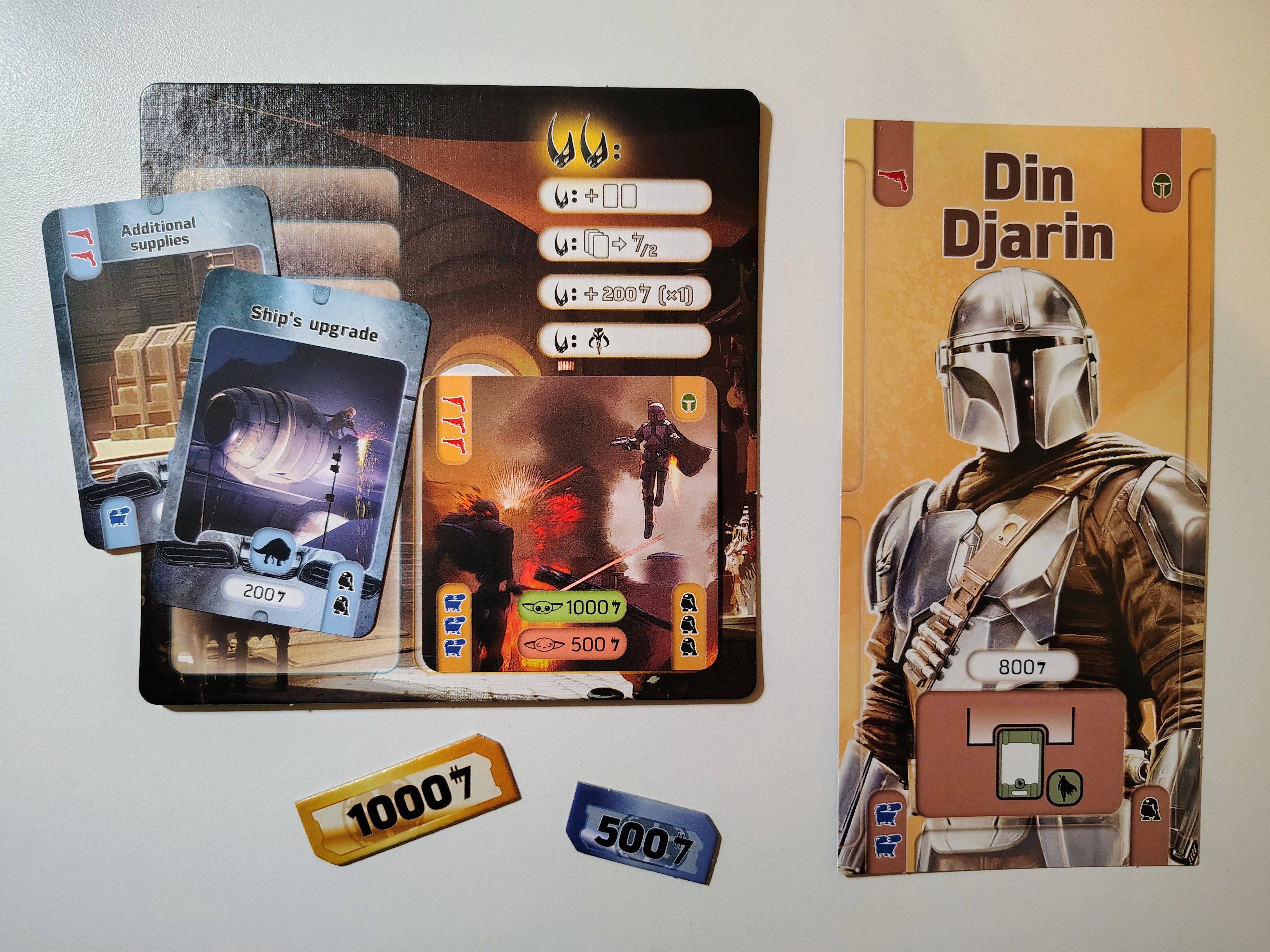
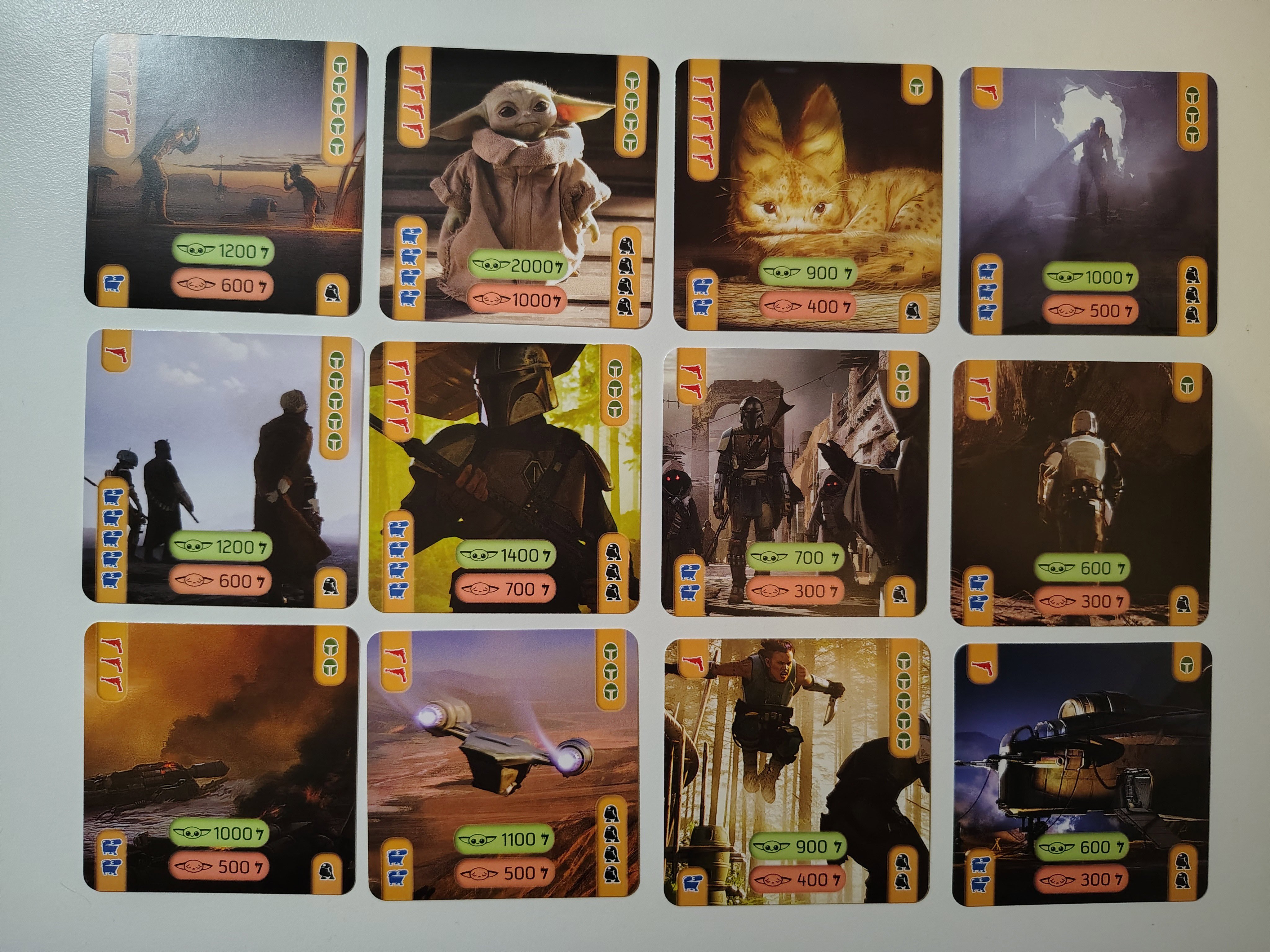
Completing a mission happens simply by covering a specific criteria during your turn. As a bounty hunter you need to adequate equipment and weaponry after all – armor (helmet markers), weapons (blaster markers), ship (Razor Crest markers) and droid assistance (astromech markers).
Each of the bounty hunters starts with certain ammount of these markers (see the character cards) and they can upgade throughout the game by spending credits on new cards.
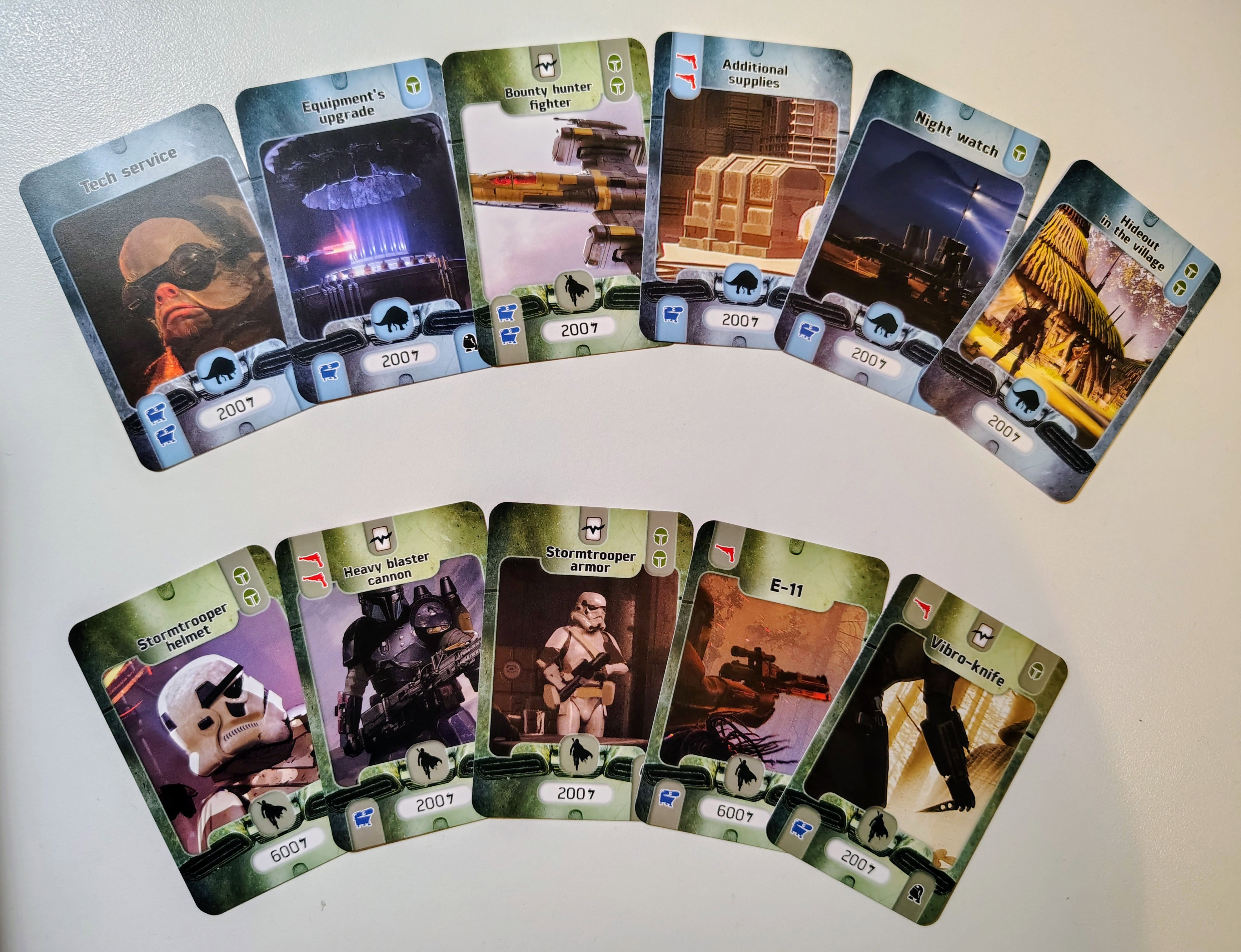
Some of the cards are permanent (they become part of your inventory), others are for one time use only and then discarded (as if for example an ally who owed you a favour helped you and left).
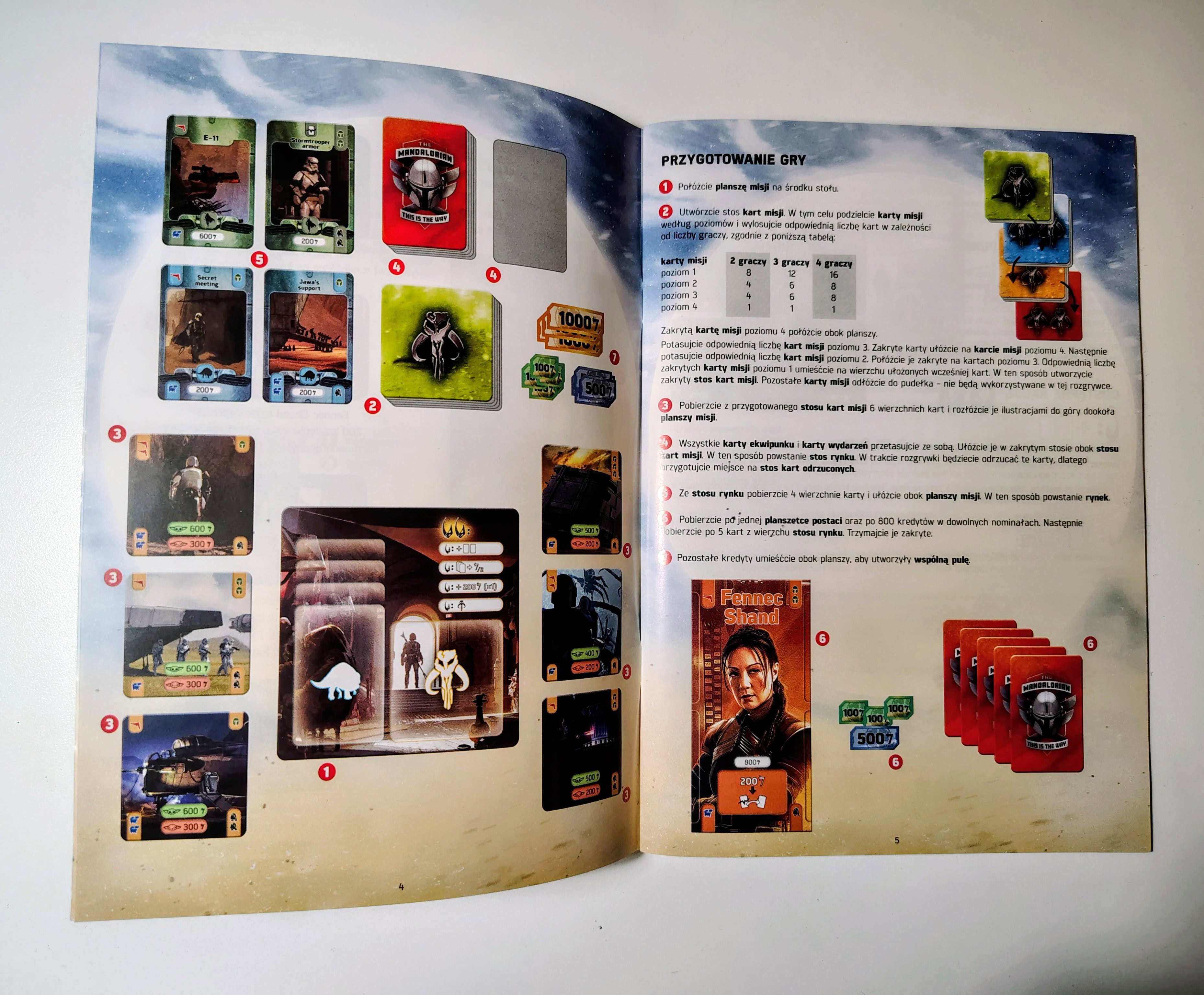
The tile of each of the currently available missions contains info, easy to read at a glance, which tells the player exactly how many of each markers he needs to have in order to complete the mission.
Competitors, however, can make things tough for you, by using cards from their hand to raise the bar. You thought you can make it?
All of a sudden a fellow player uses a card against you and you can either answer that by playing another card in order to meet the new challenge, or fail.
By playing against you other players prevent you from earning credits, but also lose resources. The less cards you have, the tougher it becomes to complete missions.
But the more credits you earn, the more cards you can buy from the market (which is like getting new weapons or recruiting allies).
Basically it’s all maths and a bit of luck. The four characters have different stats and each has a unique skill, but they are well balanced so it doesn’t really matter much which one you choose. Then you keep count of everyone’s cards and credits and try to score the best paid missions, prevent opponents to do the same, build your deck as well as possible and… be the one to get Grogu.
Possible Modifications
It doesn’t take much to modify the rules and change the gameplay so that it would fit better your group of players. You can devide into camps and play against each other in teams of two.
You can tweak the difficulty levels by adjusting the amount of missions. If you play with little kids you can even make it a collaborative experience by trying to top your best score and set a new record by earning more credits than before.
If you try to get really into it you can even try it with a DM element by telling other players stories about the missions they are about to accept, and they in return could get into character and turn it all into an exercise of Star Wars RPG storytelling for beginners.
Design and Pricing
Unlike many other budget editions and low-tier board games which often use commonly seen licensing stock images, Star Wars: Way of the Mandalorian looks quite pleasant.
The game rises above the rest by using licensed concept art from the show instead of publicity photos or screen grabs, which is a huge win for me.
It is not original art, produced especially for the game, but at the same time it does feel artistic and does not rely on overused imagery. It even brings back memories of the glorious end credits of the Mando episodes.
The cardboard elements and the card deck aren’t luxurious, but all the elements are sturdy enough and don’t easily show signs of wear.
All in all, Way of the Mandalorian is far from what you might expect from Fantasy Flight Games or Asmodee titles, but it does look and feel as something above its price tag.
I bought the game for 45 PLN (around 10 euro or 12 dollars) about two years ago, you can still easily find it for about 60-70 PLN from Polish bookstores and online vendors.
In my opinion, for this kind of money the game is a real steal. I’ve played it numerous times with my 15 year old daughter and I still haven’t gotten bored
Final Verdict
If you check out Board Game Geek you will find out that the game has landed a rating right in the middle – 5.2 out of 10. I find that to be fair, although I’d personally rate it a bit higher.
It is a simple to grasp and fun to play game, which makes good use of its theme. If you are a casual board game fan, but you are a Star Wars afficionado, this could be your first step into a larger world.
Who knows? Maybe Way of the Mandalorian will spark your interest and you will move on to something more elaborate like Corey Konieczka’s Mandalorian Adventures (which recently saw its second expansion, Sworn to the Creed).
You can share also with your younglings in order to encourage strategy thinking and introduce them bit by bit to more advanced mechanics. And it is so cheap that even if you don’t play the hell out of it it is still very much worth it.