This guide explains how Omnidirectional and Directional Combat in The Blood of Dawnwalker works. You will learn to Perfect Blocks, manage Stamina, and optimize your Abilities.
Omnidirectional vs Directional Combat Explained
Everything regarding Melee Combat applies to Swordplay in both the Human and Vrakhiri forms, as well as the Claw Attacks of Vrakhiri Form.
There are two types of Melee Combat: Directional and Omnidirectional. While you can mix and match these styles, they do have perks that are functionally exclusive to them and could alter your early Skill Point use depending on what you find comfortable.
Regardless of how you mix and match these styles, all Melee Combat will make use of Stamina, shown as a yellow bar under your Health.
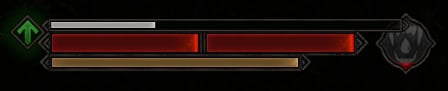
This will deplete with each Attack and Block, meaning you’ll need to carefully balance when to be aggressive and when you have to be defensively.
Omnidirectional Melee
The Omnidirectional Melee style offers a very simple system for Attacking and Blocking. You simply tap the assigned Attack Button or Hold the assigned Block button to perform the actions automatically.
While easy, this will not completely trivialize combat (outside of playing on Story Mode), as the Omnidirectional Style has drawbacks as a result of that simplicity.
Omnidirectional Attacks
Omnidirectional Attacks are performed in varied directions with each swing, however, enemies will begin blocking many of your attacks if you’re simply mashing the Attack Button. It does make combat easier, but not by a ton.
You’ll need to rely on Dodging or Directional Blocks to create openings to make effective use of this attack style. Dodging is the simplest way, but will consume more Stamina as well, while also having a small cooldown. There are the Vampiric and Witchcraft abilities which can be used to also create opening, but due to their longer cooldowns, will be less reliable.
This also means giving up the use of Perks like Perfect Riposte and Precision that would provide increased damage or reduced Stamina Cost for performing Directional Attacks consistently. Growing Momentum will still work to provide similar bonuses.

However, it’s not all doom and gloom for you if you find yourself struggling with Directional Attacks. While there are plenty of Perks that work off Directional Attacks, there are far more Perks that rely on Perfect Blocks, which is highly recommend you practice.
Omnidirectional Blocking
Omnidirectional Blocking is very consistent, but will consistently drain your Stamina. As a result this this can limit your own aggressive actions on top of making you vulnerable to enemy attacks quicker. While there are perks to mitigate this, such as the Omniblock perk reducing the stamina cost, they’re very limited.

The biggest drawback to Omniblock, however, is that you cannot Perfect Block at all. This severely reduces the number of useful Perks you can use to make combat more fluid and limits your overall damage output.
Directional Melee
Directional Melee asks you to input a direction (using WASD, or Left Stick) with each Attack and Block, which makes combat more difficult to navigate at times. However, the payoff for performing them adequately allows for far more fluid and aggressive play.
If you’ve played games such as For Honor or those in the Mount & Blade series, you’ll feel right at home as the combat style will feel very similar. Though, the general systems are quite simplified being primarily a PvE game.
Directional Attacks
Which direction you choose to perform Directional Attacks is entirely up to you, but you’re limited to performing them four directions: Left, Up, Right, and Down. You’ll only be punished for attacking the same direction repeatedly, similar to repeatedly using Omnidirectional Attacks.
One benefit of performing Directional Attacks is that you’ll more reliably hit your target. This can be partially attributed to the slightly slower and more methodical approach to combat, but also because as far as your enemies are concerned, you’re less predictable so long as you swapping up your directions.
Choosing your direction of attack also allows you to more reliably lean into the small inherent area they cover. Attacks directed Upward or Downward are likely to only hit one target, unless multiple targets are very close together. While Attacks to the Left and Right hit a broader area, making it easier to hit multiple targets.
The biggest payoff for learning Directional Attacks lies in the associated Perks, specifically Precision, which not only boosts your damage output, but also reduce Stamina costs quite heavily at later levels.
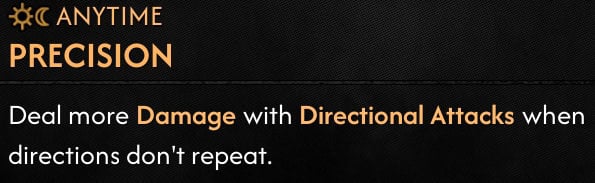
Growing Momentum also benefits from your attacks landing more frequently, but doesn’t require Directional Attacks to be used.
Directional Blocking
Unlike Directional Attacks, Directional Blocks needs to be performed in specific directions, as shown on the Indicator on enemies in combat. Similar to Directional Attacks, these can be directed Left, Up, Right, or Down, and are tied to the direction of the incoming attack.
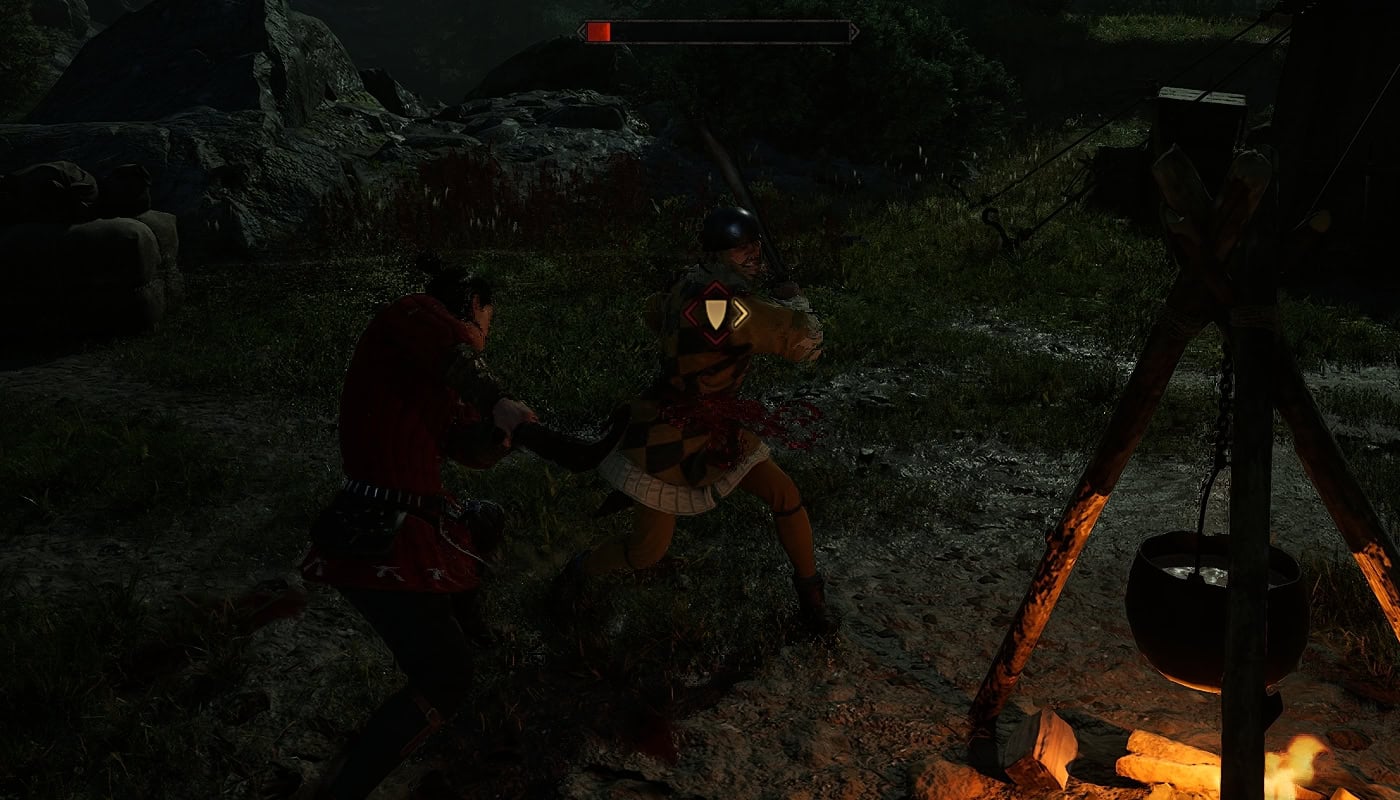
Both inputs can be held to consistently perform Directional Block, however you’re rewarded further by timing the Block input which allows you to perform a Perfect Block. The timing for this is indicated by the shield icon on the target’s indicator changing from yellow to red.
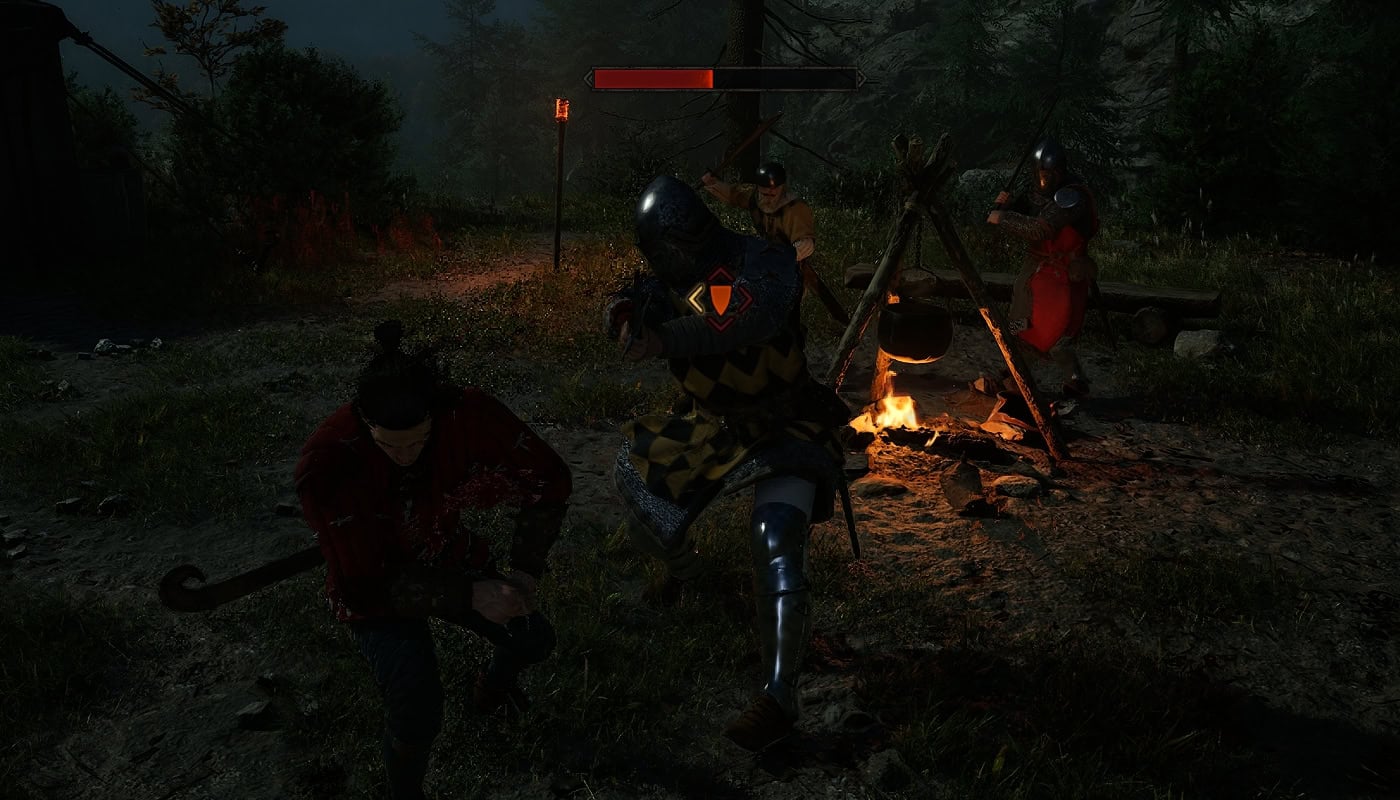
Perfect Blocks are the main reason you’ll want to learn Directional Blocking. This is primarily because Perfect Blocks also do not drain Stamina at all. This allows you to focus your Stamina usage on attacking more aggressively and evading the unblockable Attacks.
Perfect Blocks also have so many Perks tied to them that can significantly boost your damage to an enemy making them key to more aggressive play. From Perfect Riposte allowing for a powerful Directional Melee follow up, the damage boost of Counterattack, or even the Weaken effect of Sharp Eye.
Using Abilities in Combat
In addition to the general Melee Combat system, there are Abilties that can be used alongside it for more combat options. These are spread across the three Skill Trees: Swordmastery, Witchcraft, and Vampirism. They also come in two categories: Passive and Active.
All Abilities will take up an Active Ability Slot, regardless if it is an Active or Passive Ability. This means you’ll want to hone your playstyle around a smaller set of abilities instead of attempting to level them all.
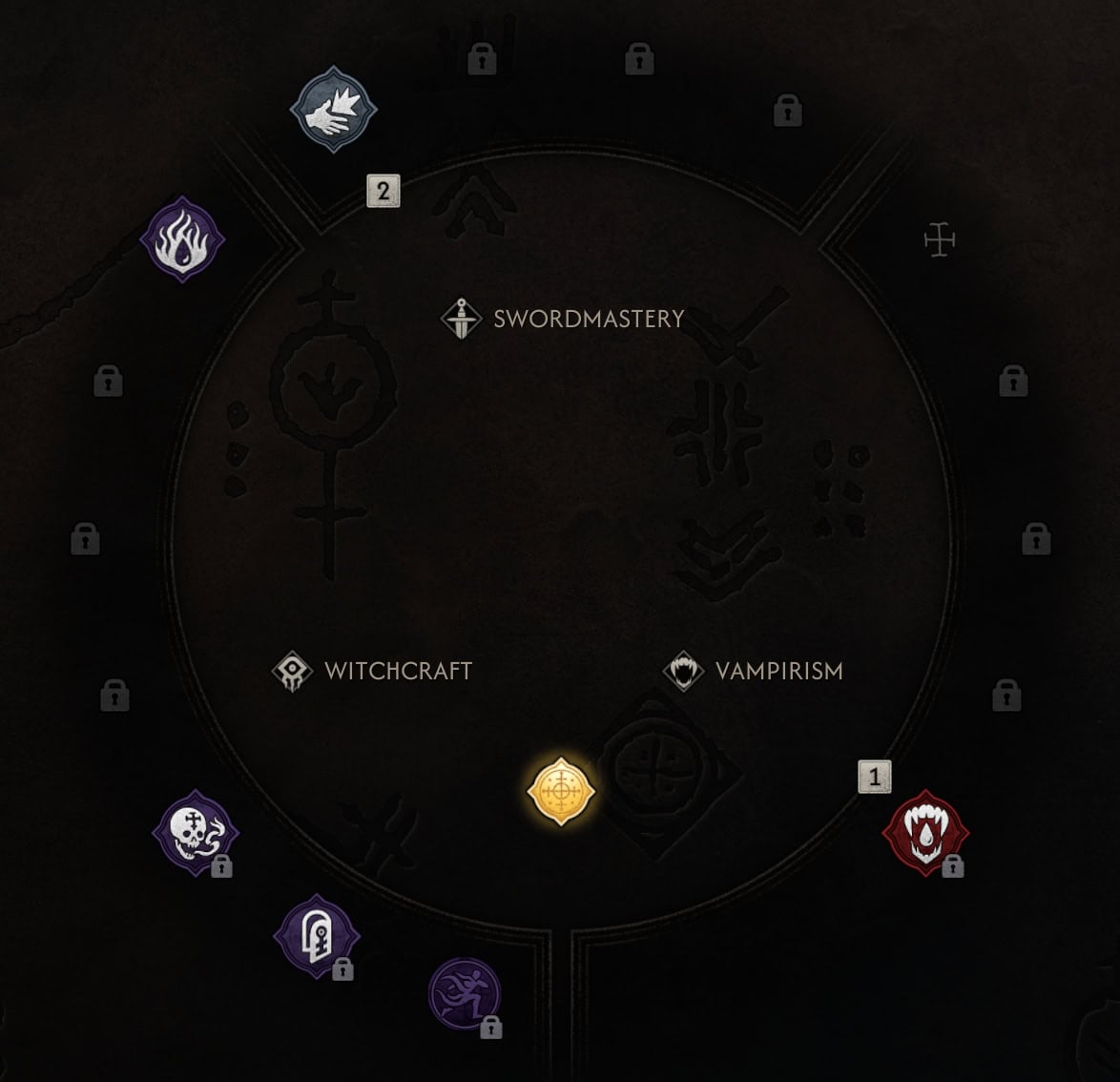
Once assigned to an Active Ability Slot, Active Skills can also be assigned to Quickslots, for easier use in Combat.
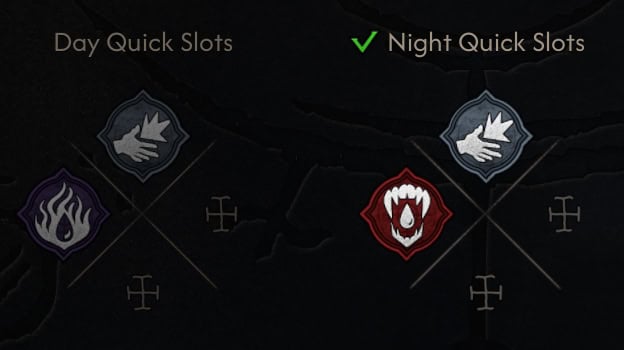
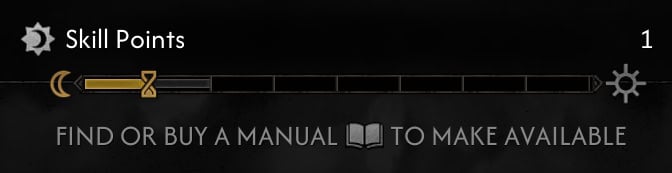
Most abilities will require either a Tutor or Manual to learn. Subsequently, this means that learning new abilities will consume one or more segments of time, taking potential time away from Quests and other activities that use Time as a Resource.
Passive Abilities
Passive Abilities function like Perks, however they come at the cost of one of your Active Ability Slots. These often have trigger condition that active their effects for a short time.
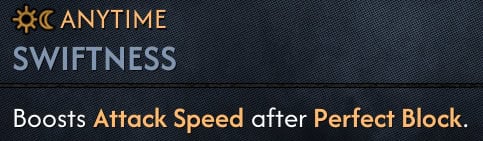
Using the Swordmastery skill Swiftness as an example, Swiftness will increase your Attack Speed for ~6 seconds after performing a Perfect Block.
Active Abilties
Active Abilities are often powerful attacks that can be when you have access to their respective forms. However, they are are tied to two addtional limiters: Cooldowns and Costs.
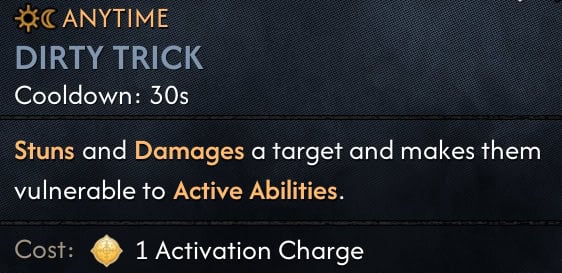
Cooldowns are fairly simple, recovering over time. There are also Perks such as Restless Blade than can reduce them, or Perks that reset or reduce cooldowns based on an activation condition, such as Sword Sage.
All Active Abilites also have a Cost associated with them. This is primarily Activation Charges, used by all Active skills, which recover both passively and while performing actions in combat. However some Witchcraft and Vampiric Abilites also have a Health Cost tied to them.
Swordmastery Abilities
Swordmastery Abilities tie into Swordplay, often requiring a Sword to be your equipped weapon to be used. This leaves them available regardless of the time of day.
In total, there are 7 Swordmastery Abilities. However, there is a maximum limit of 4 Swordmastery Skills equipped at once. This limit is determined by the level of the Master Fencer perk, unlocking one additional slot per rank.
Vampirism Abilties
Vampirism Abilities tie into your Vrakhiri Form and don’t care if you are using a regular Melee or your Vrakhiri Claws. They are however, only available during the night.
In total, there are 10 Vampirism Abilities. However, there is a maximum limit of 4 Vampirism Skills equipped at once. This limit is determined by the level of the Vrakhiri Might perk, unlocking one additonal slot per rank. The Voracious Bite Skill has it’s own dedicated slot and cannot be unequipped.
Witchcraft Abilities
Witchcraft Abilities are tied to your Human Form and don’t care if you have a Sword Equipped or not. They are however only available during the day.
In total, there are 10 Witchcraft Abilities. However, there is a maximum limit of 4 Witchcraft Skills equipped at once. This limit is determined by the level of the Forbidden Sigils perk, unlocking one additional slot per rank. The Compel Soul and Astral Communion Skills have their own dedicated slots and cannot be unequipped.
Abilities Summary Table
| Ability Tree | Form Requirement | Time of Day | Total Abilities |
|---|---|---|---|
| Swordmastery | Swordplay | Anytime | 7 |
| Vampirism | Vrakhiri Form | Night | 10 |
| Witchcraft | Human Form | Day | 10 |
Use our recommended best Skills to unlock early in The Blood of Dawnwalker to get a good start and worry less about your initial build and focus more on the story and other game mechanics and systems instead.
Combat Tips and Tricks
While a few of these are mentioned in the guide above, they’re worth repeating as they’re important to keep in mind.
Omnidirectional Attacks rely on you creating openings to be effective. Performing Dodges, performing Perfect Blocks, or even casting Abilities can reliably create openings, but only Perfect Blocks don’t have a cooldown!
Only Directional Blocks can be Perfect Blocks. Perfect Blocks cost no Stamina and can trigger a large array of Perks. This makes Directional Blocking incredibly important to learn, even if you forgo Directional Attacks.
Directional Attacks allow more control over the area you Attack. Attacking along the vertical axis cover much less area, while those on the horizontal axis are boarder sweeping attacks.
The Directional inputs for both Directional Attacks and Blocks can be held, requiring only the Attack or Block input to be pressed. This makes the directional combat easier to approach, however it may cause unwanted movement and repeating directions for attacks will be punished.